

Internal Audit Methodology

Risk-Based Internal Auditing (RBIA): A Practical Guide for Modern Organisations

Risk-Based Internal Auditing (RBIA) is widely recognised as the most effective approach for aligning internal audit activities with organisational risk. Instead of auditing processes on a fixed schedule, RBIA prioritises assurance work based on the areas that present the greatest potential impact to objectives. This guide explains how RBIA works, how risk informs audit planning, and how organisations connect risk registers, controls, incidents and remediation actions within a structured audit lifecycle.
Symbiant Internal Audit Management Software with Optional AI-Assistant. Streamline Your Entire Audit Lifecycle

Risk-Based Audit Methodology

What Is Risk-Based Internal Auditing?

Risk-Based Internal Auditing (RBIA) is a strategic auditing methodology that prioritises audit activity according to the organisation’s exposure to risk. Rather than applying a uniform audit checklist across departments or processes, RBIA focuses assurance efforts on the areas where risks to organisational objectives are greatest.

By aligning audit activity with the organisation’s risk profile, RBIA ensures that internal audit provides meaningful insight into the issues that could affect performance, regulatory compliance, operational resilience, or strategic outcomes.

In a risk-based approach, internal auditing becomes closely connected with the organisation’s wider risk management framework. Risk registers, internal controls, incident reporting, and remediation actions all play an important role in informing audit priorities and shaping the audit plan.

When these governance elements are integrated, internal audit moves beyond routine compliance checks and becomes a strategic function that helps organisations identify weaknesses, strengthen controls, and manage risk more effectively.

Symbiant’s affordable, AI-ready GRC and Audit software replaces outdated methods with a secure, connected ecosystem that ensures transparency, resilience, and compliance — helping you achieve objectives, strengthen resilience, and simplify complex processes.

Modern Internal Audit Practices

Why Risk-Based Auditing Is Becoming the Standard

Traditional internal auditing often relied on cyclical schedules or department-based audit coverage. While this approach ensured regular reviews, it often failed to focus attention on the areas that posed the greatest risk to organisational objectives.

As organisations have become more complex and regulatory expectations have increased, this traditional model has proven insufficient for identifying emerging threats, operational weaknesses, and control failures.

Risk-Based Internal Auditing provides a more strategic approach by prioritising audit activity according to the organisation’s risk profile. Instead of applying equal scrutiny across all areas, audit resources are directed towards the activities that present the greatest potential impact.

A risk-based approach enables organisations to:

• Focus audit resources on the most critical risks
• Strengthen oversight of risk mitigation strategies
• Identify weaknesses in internal controls
• Improve coordination between risk management and internal audit

For these reasons, Risk-Based Internal Auditing is widely recommended by professional governance frameworks and internal audit standards.

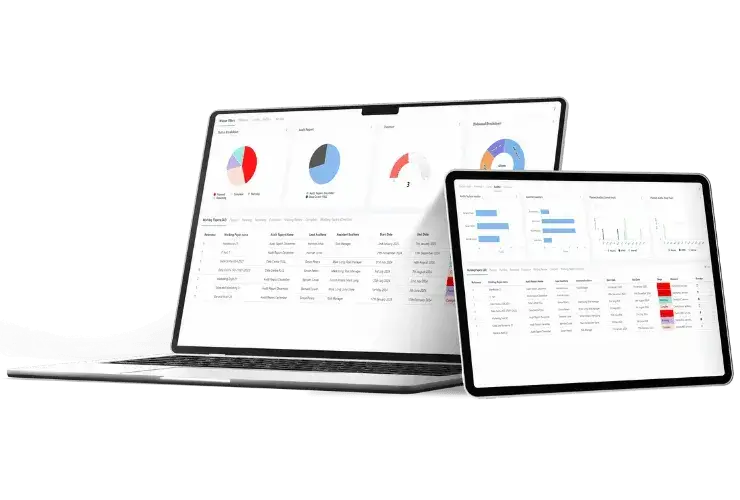
Modernise your risk, compliance and audit processes with Symbiant’s agile modular platform. Unlimited users, no hidden fees, and powerful automation included.webp

Risk-Based Audit Methodology

How Risk Registers Inform the Audit Plan

At the centre of RBIA is the risk register, which documents the risks facing the organisation, their likelihood and impact, and the controls designed to mitigate them.

By analysing the risk register, internal auditors can identify:

  • high-risk areas requiring assurance

  • changes in risk exposure

  • gaps in risk mitigation strategies

  • areas where control effectiveness should be tested

Audit plans can then be prioritised based on these insights.

Symbiant Governance, Risk Management, Compliance (GRC) Software with an optional Professional GRC Trained AI Assistant.

Core Concepts

Key Risk Concepts Used in Risk-Based Auditing

Risk-Based Internal Auditing relies on several core concepts that help auditors understand and evaluate organisational risk exposure. The below concepts help internal auditors determine where assurance activity should be concentrated and which areas require deeper evaluation.

Inherent Risk

The level of risk that exists within an activity or process before any internal controls are applied.

Control Risk

The likelihood that existing internal controls may fail to prevent or detect significant issues.

Residual Risk

The remaining level of risk after controls and mitigation measures have been implemented.

Likelihood and Impact

Risks are typically assessed by combining the probability of an event occurring with the potential severity of its consequences. This scoring approach helps organisations prioritise which risks require closer audit attention.

Audit Lifecycle

The Risk-Based Auditing Process

Implementing Risk-Based Internal Auditing typically follows a structured cycle that connects risk identification, audit planning, testing, and remediation. This structured approach allows internal audit to provide targeted assurance while supporting the organisation’s broader risk management objectives.

1. Define the Audit Universe

Identify all auditable areas within the organisation, including business processes, systems, projects, and third-party relationships.

2. Risk Identification and Assessment

Collaborate with management to identify key risks and assess their likelihood and impact in relation to organisational objectives.

3. Prioritisation

Rank auditable areas based on risk exposure so that high-risk activities receive greater audit focus.

4. Risk-Focused Audit Planning

Develop an audit plan that targets high-priority risks and allocates resources accordingly.

5. Audit Execution and Control Testing

Evaluate the design and effectiveness of internal controls to determine whether risks are being properly mitigated.

6. Reporting and Follow-Up

Provide clear findings and recommendations to management and monitor remediation actions until they are completed.

1. Define the Audit Universe 2. Risk Identification and Assessment 3. Prioritisation 4. Risk-Focused Audit Planning 5. Audit Execution and Control Testing 6. Reporting and Follow-Up

Risk-Based Audit Methodology

Managing Audit Evidence and Findings

A core component of Risk-Based Internal Auditing is the ability to capture, organise, and interpret audit evidence in a structured and traceable way. During the audit process, auditors gather documentation, testing results, observations, and supporting data that form the foundation of audit findings and management conclusions.

To maintain integrity and transparency within the audit process, organisations typically rely on structured working papers that provide a consistent framework for documenting procedures, evidence, and testing outcomes. These records ensure that audit activities remain traceable, allowing reviewers and stakeholders to clearly understand how conclusions were reached.

Effective audit documentation generally includes:

• Structured working papers that centralise audit documentation and testing results
• Documented testing procedures that demonstrate how controls were evaluated
• Clear supporting evidence linking observations to audit findings
• Transparent reporting mechanisms that communicate outcomes to management and governance bodies

When managed consistently, this documentation creates a reliable audit trail that strengthens accountability, improves audit quality, and ensures that audit conclusions are supported by verifiable evidence.

Transform incident reporting into connected risk intelligence. Symbiant links incidents to risks, controls and audit workflows to strengthen governance.

Remediation and Governance Oversight

From Audit Findings to Remediation Actions

A critical stage of Risk-Based Internal Auditing is ensuring that audit findings translate into meaningful remediation. Identifying control weaknesses or process failures is only the first step; organisations must also implement corrective actions that address root causes and reduce risk exposure.

Modern governance platforms help automate this transition by converting audit observations into structured remediation workflows. Once a deficiency is identified during an audit, the finding can be formally documented and linked to the organisation’s broader risk context, ensuring that management clearly understands the potential impact on operations, compliance, or strategic objectives.

Effective remediation management typically involves:

• Root cause analysis to determine why the issue occurred
• Linking findings to the risk register to understand the broader risk implications
• Assigning responsible owners who are accountable for implementing corrective actions
• Establishing deadlines and monitoring progress until remediation is completed

By structuring remediation in this way, organisations can move beyond static audit reports and ensure that audit insights lead to tangible improvements in governance, control effectiveness, and risk management.

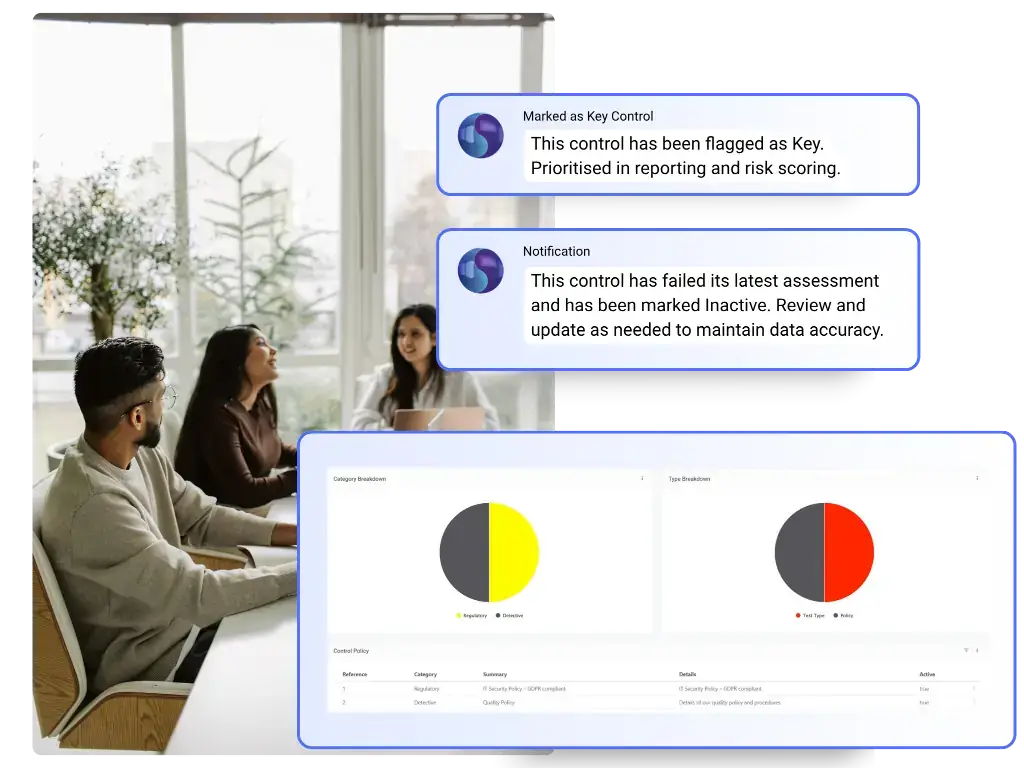
Transform governance, risk and compliance with Symbiant’s connected modules. Create oversight, automate tasks and support decision-making from one secure system.

Full Accountability

Tracking Audit Actions and Ensuring Accountability

One of the most important aspects of Risk-Based Internal Auditing is ensuring that remediation actions are completed.

Without effective follow-up, audit findings may remain unresolved, leaving organisations exposed to ongoing risk.

Action tracking enables organisations to:

  • assign responsibility for remediation

  • monitor implementation progress

  • identify overdue actions

  • report remediation status to senior management or audit committees

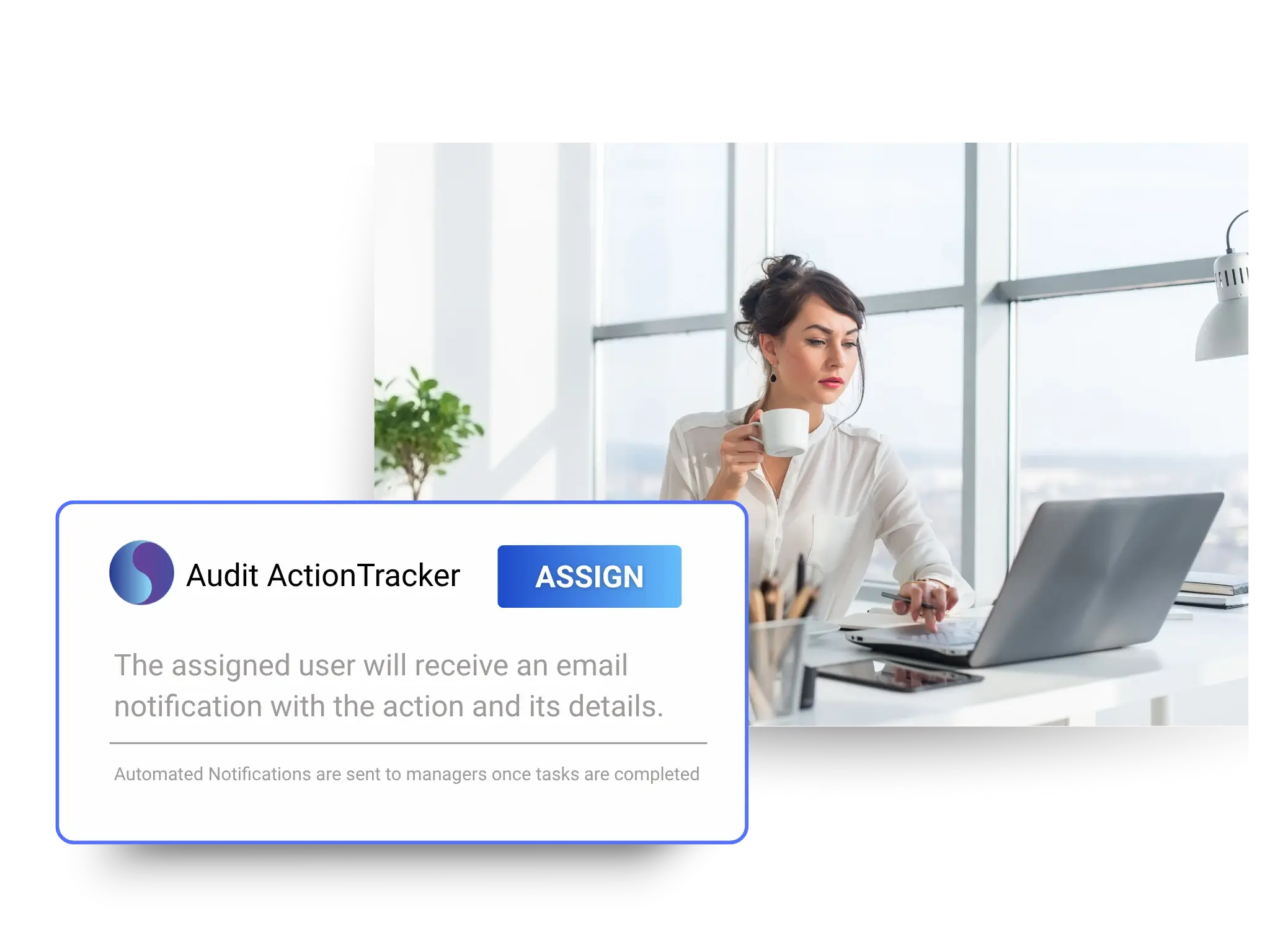
Stay in control with precision-timed notifications. Symbiant’s audit management software automatically alerts team members and managers about every upcoming or overdue task, reducing delays and boosting accountability across the board.

Single Source of truth

How Incidents and Emerging Risks Inform Internal Audit

Symbiant GRC breaks down the silos between operations and oversight by feeding real-time incident data directly into the Audit Universe. When an operational failure is logged in the Incident Management module,

Symbiant’s integrated architecture maps it to the corresponding Risk Register entry and its associated controls, instantly highlighting where risks are increasing or controls are failing. This dynamic link allows internal audit teams to pivot their focus based on hard data rather than an annual static plan, ensuring additional audit scrutiny is applied exactly where emerging threats appear.

By using these live insights, auditors can move from being reactive to proactive, using Symbiant’s trend analysis and heatmaps to identify systemic weaknesses before they manifest as major breaches, ultimately ensuring the audit plan remains agile and aligned with the organisation’s current risk profile.

Link incidents to risks and controls with Symbiant’s GRC Incident Reporter software

Single Source of truth

Connecting Risk, Audit, Controls, and Actions

Symbiant GRC serves as the connective tissue for your entire governance framework, replacing fragmented spreadsheets with a unified data model where risk, audit, controls, and actions live in a single ecosystem. By using Symbiant’s integrated modules, every entry in the Risk Register is linked to its corresponding Internal Controls and any related Operational Incidents, providing auditors with immediate, high-definition visibility into true risk exposure.

When an audit test fails or an incident occurs, the platform’s “Golden Thread” architecture automatically updates the control’s effectiveness status and triggers an entry in the Action Tracker, ensuring that remediation is never a standalone task but a direct response to a proven vulnerability. This closed-loop approach ensures that governance oversight is based on live, cross-referenced data, allowing the board to move from static snapshots to a dynamic, real-time understanding of how audit actions are actively strengthening the organisation’s resilience.
 

Implement ISO 9001 with flexible, modular software. Streamline quality management, risk-based thinking, audits, and continuous improvement with Symbiant

Professional Standards

Frameworks That Support Risk-Based Auditing

Risk-Based Internal Auditing is commonly supported by established governance and risk management frameworks that provide structure and best practices.

These include:

COSO ERM – Integrates enterprise risk management with organisational strategy and performance.

ISO 31000 – Provides internationally recognised principles and guidelines for managing risk across organisations.

IIA Standards – Professional practice standards from the Institute of Internal Auditors that emphasise risk-based audit planning.

COBIT – A framework widely used for governance and assurance of IT systems and technology risks.

These frameworks help ensure that risk-based auditing is implemented consistently and aligned with recognised governance practices.

Symbiant delivers intuitive GRC software with dynamic risk registers, controls, incidents and audit tools. Create a connected, evidence-ready SSOT across your organisation.webp

Symbiant AI for Auditors

Unlock the Full Potential of Your Audits

Symbiant AI revolutionises auditing by automating processes, enhancing precision, and enabling proactive decision-making.

Increased Efficiency

Automates risk identification and assessment, significantly reducing time spent on manual data collection.

Finds duplicate data, including risks, instantly, saving up to 90% of your time.

Intelligent Insights

Connects data across modules, departments, and functions, offering a holistic view of your organisation’s risks.

Identifies hidden vulnerabilities and evaluates control effectiveness, ensuring audits are thorough and impactful.

Proactive Risk Mitigation

Maps the domino effect of risks and predicts control failure consequences, enabling forward-thinking strategies.
Provides tailored, actionable recommendations to address risks and enhance overall organisational resilience.

Symbiant’s AI now automatically detects new potential risks from audit findings, ensuring no emerging threats go unnoticed. By analysing audit data in real time, it enhances risk awareness and supports proactive decision-making.

Enhanced Reporting and Documentation

Automatically generates audit recommendations and action steps for resolving findings. Refines and rewrites audit documentation for clarity and accuracy, ensuring seamless communication of results.

Strategic Focus for Auditors

Eliminates repetitive tasks, allowing auditors to concentrate on evaluating controls and offering strategic guidance.

Aligns audit findings with business objectives and compliance requirements, supporting better decision-making and organisational goals.

With Symbiant AI, auditing evolves from a reactive, time-intensive process to a streamlined, insight-driven function that empowers your team to deliver smarter, faster, and more strategic outcomes.


Increased Efficiency Intelligent Insights Proactive Risk Mitigation Enhanced Reporting and Documentation Strategic Focus for Auditors