
Risk Management Guide
What Is a Risk Workshop? How to Run Modern Virtual Risk Workshops
Risk workshops are a structured way for organisations to identify, assess, and prioritise risks that could impact strategic and operational objectives. By bringing together stakeholders from across the business, risk workshops help uncover potential threats, evaluate their impact, and define appropriate mitigation actions. While traditionally conducted as in-person meetings, many organisations now run virtual risk workshops using specialised software to improve collaboration, documentation, and action tracking.
RISK ASSESSMENT DEFINED
Risk Workshops for Effective Enterprise Risk Management
Risk workshops are a widely used technique within enterprise risk management to help organisations identify, assess, and prioritise risks that could affect strategic and operational objectives.
A risk workshop brings together stakeholders from across the organisation to discuss potential threats, evaluate their impact, and agree on appropriate mitigation actions. These structured discussions enable organisations to gain a shared understanding of risk exposure and improve the quality of risk-based decision-making.
Traditionally, risk workshops were conducted as in-person meetings using whiteboards, sticky notes, or spreadsheets. While this approach can work for small teams, it often limits participation and makes documentation difficult.
Today, many organisations are moving towards virtual risk workshops, where teams collaborate online within a structured environment designed specifically for risk assessment and risk management.

RISK REGISTER DEFINED
What Is a Risk Workshop?
A risk workshop is a facilitated session where stakeholders collaborate to identify, analyse, and evaluate risks that may impact organisational objectives.
These workshops are commonly used within structured risk management frameworks such as:
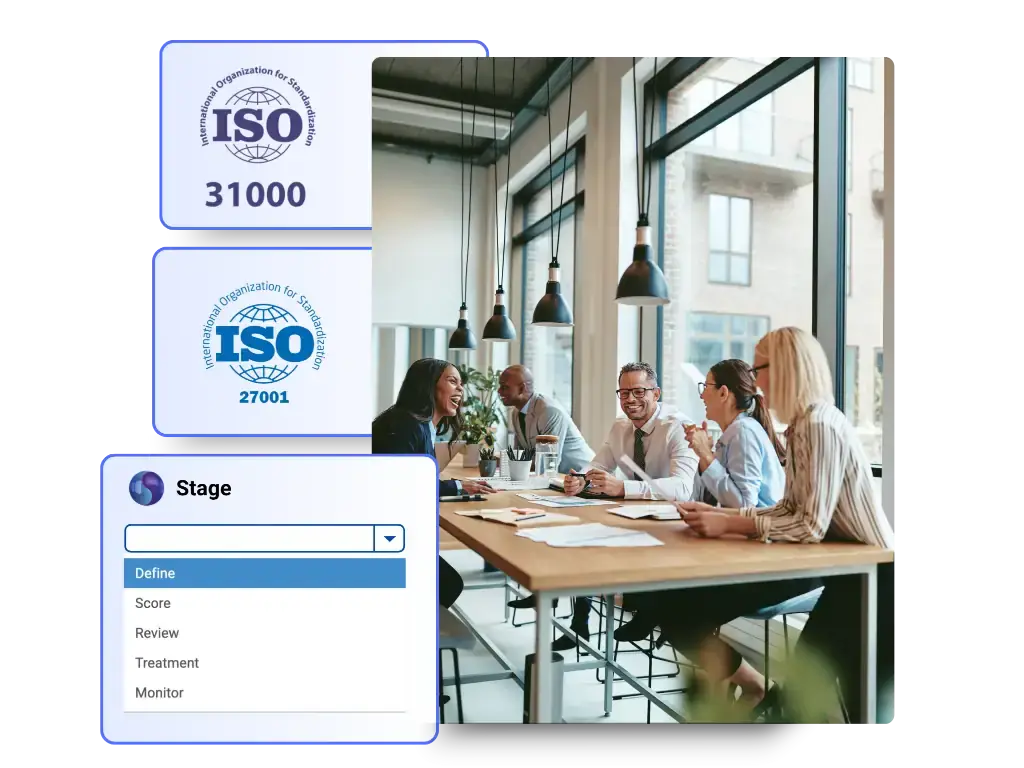
- ISO 31000 risk management
- ISO 27001 information security risk assessments
- enterprise risk management (ERM) programmes
During a risk workshop, participants work together to:
- identify potential risks and threats
- analyse possible causes and consequences
- assess likelihood and impact
- prioritise risks based on severity
- define appropriate mitigation actions
Risk workshops encourage collaboration across departments and provide a structured environment for capturing insights from subject matter experts, operational teams, and leadership.
Risk Management Benefits
Why Organisations Run Risk Workshops
Risk Identification
Collaborative risk identification
Multiple perspectives help reveal operational, financial, and strategic risks that may not be visible within individual teams.
Risk Prioritisation
Improved prioritisation of risks
Structured discussions enable organisations to assess likelihood and impact more accurately, helping prioritise mitigation efforts.
Cross-Department Alignment
Stronger alignment across departments
Workshops help ensure that different parts of the organisation share a consistent understanding of risks and their potential impact.
Strategic Decision Support
Better decision-making for leadership
Clear risk insights allow management to allocate resources more effectively and strengthen organisational resilience.
Traditional Risk Workshops vs Virtual Risk Workshops
Traditional Risk Workshops
Traditional workshops typically involve:
in-person meetings
whiteboards or sticky notes
spreadsheet-based documentation
manual follow-up actions
However, this approach presents several challenges:
scheduling conflicts can limit participation
discussions may not be fully documented
risk scoring can become inconsistent
follow-up actions may be tracked separately from the assessment process
Virtual Risk Workshops
Virtual risk workshops allow organisations to conduct risk assessments within a structured digital environment.
Using specialised risk management software, participants can collaborate remotely, capture risk information consistently, and track mitigation actions in a centralised system.
Benefits of virtual risk workshops include:
participation from teams across multiple locations
asynchronous contributions when participants cannot attend simultaneously
consistent scoring methods and structured workflows
centralised documentation of risk discussions
automated tracking of mitigation actions and responsibilities
For modern organisations operating across multiple teams and locations, virtual workshops often provide a more scalable and effective approach to risk assessment.
The Risk Workshop Process
A successful risk workshop typically follows a structured process to ensure risks are identified, assessed, and addressed effectively.
How to Run a Risk Assessment Workshop
Running an effective risk workshop requires careful preparation and structured facilitation.
Before organising a workshop, define the scope of the assessment. This may involve reviewing risks related to a specific project, business unit, or strategic initiative.
Participants collaborate to identify potential threats, vulnerabilities, and emerging risks that may affect the organisation.
Risks are evaluated using a defined scoring methodology, allowing participants to prioritise risks based on their likelihood and potential impact.
Once risks are prioritised, the group proposes mitigation strategies or control improvements designed to reduce risk exposure.
The results of the workshop should be documented clearly, often within a risk register, where risks, scores, and mitigation actions can be tracked over time.
ENTERPRISE RISK MANAGEMENT CONTEXT
Common Challenges in Risk Workshops
While risk workshops are valuable tools for risk identification, they can face several challenges when managed manually.
Common issues include:
inconsistent scoring methods
incomplete documentation of discussions
difficulty tracking mitigation actions
limited participation from key stakeholders
These challenges often arise when organisations rely on spreadsheets or informal processes to capture risk assessments.
UNDERSTANDING THE DIFFERENCE
Why Many Organisations Use Risk Workshop Software
To overcome these challenges, many organisations now use dedicated risk workshop software to facilitate structured and collaborative risk assessments.
Risk workshop software enables organisations to:
guide participants through structured workshop stages
capture risk scoring and rationale consistently
document discussions in a centralised system
track mitigation actions and responsibilities
link risks to related controls, incidents, and assessments
This structured approach helps organisations improve transparency, accountability, and consistency in their risk management processes.

Risk Management Software
Symbiant Risk Workshops: Collaborate Anytime, Anywhere
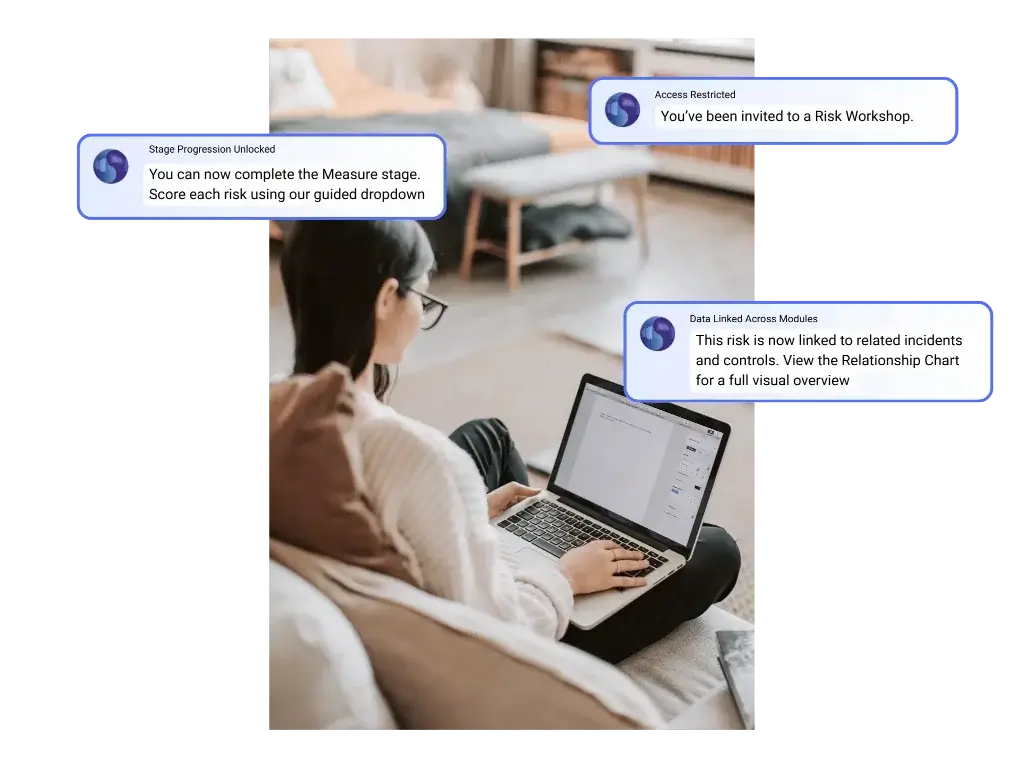
Symbiant’s Virtual Risk Workshops are secure online meeting rooms purpose-built to help you collaborate on risk assessments with colleagues anywhere in the world, regardless of their risk management expertise. These remote risk assessment workshops make it easy to identify, evaluate, and score risks at your own pace, without requiring all participants to be present at the same time.
Designed for modern teams, our virtual risk management workshops provide an accessible, secure environment where you can facilitate meaningful discussions, agree on treatment plans, and track actions to completion. Whether you need a virtual risk workshop software solution for compliance, strategic planning, or day-to-day operations, Symbiant delivers the risk workshop collaboration tools that keep your organisation agile, engaged, and ISO-aligned.
Engages the Entire Organisation in Risk Management
Symbiant’s Risk Workshops transcend traditional meeting formats by engaging all levels of the organisation, from executives to frontline staff, in a structured, objective-centric risk dialogue. This approach ensures that every risk identified is directly tied to the achievement of strategic, operational, and tactical objectives, fostering an enterprise-wide culture of risk awareness and accountability.
Drives Action and Ensures Compliance
By aligning every treatment plan and mitigation control with recognised frameworks such as ISO 31000 and ISO 27001, Symbiant transforms risk discussions into measurable, trackable actions. This not only strengthens compliance posture but also enhances organisational agility and resilience, enabling faster, better-informed responses to an ever-changing risk landscape.
Optional AI Assistant
Flexible, Agile, Cost-Effective Risk Management Platform
A Structured, Four-Stage Virtual Risk Management Process
Symbiant’s Virtual Risk Workshops Software uses a structured, ISO 31000 and ISO 27001-supportive process that guides participants from risk identification through to action tracking. This multistage approach ensures risks are identified, scored, treated, and monitored, making it an ideal solution for remote risk assessment workshops and online risk management collaboration.
Identify
Add new risks or re-evaluate existing ones within a secure virtual risk workshop environment. Engage cross-department participants to ensure all perspectives are captured.
Measure
Score risks using custom or standard scoring sets with qualitative and quantitative factors. Drop-down options make it simple for non-risk experts to provide accurate input.
Treat
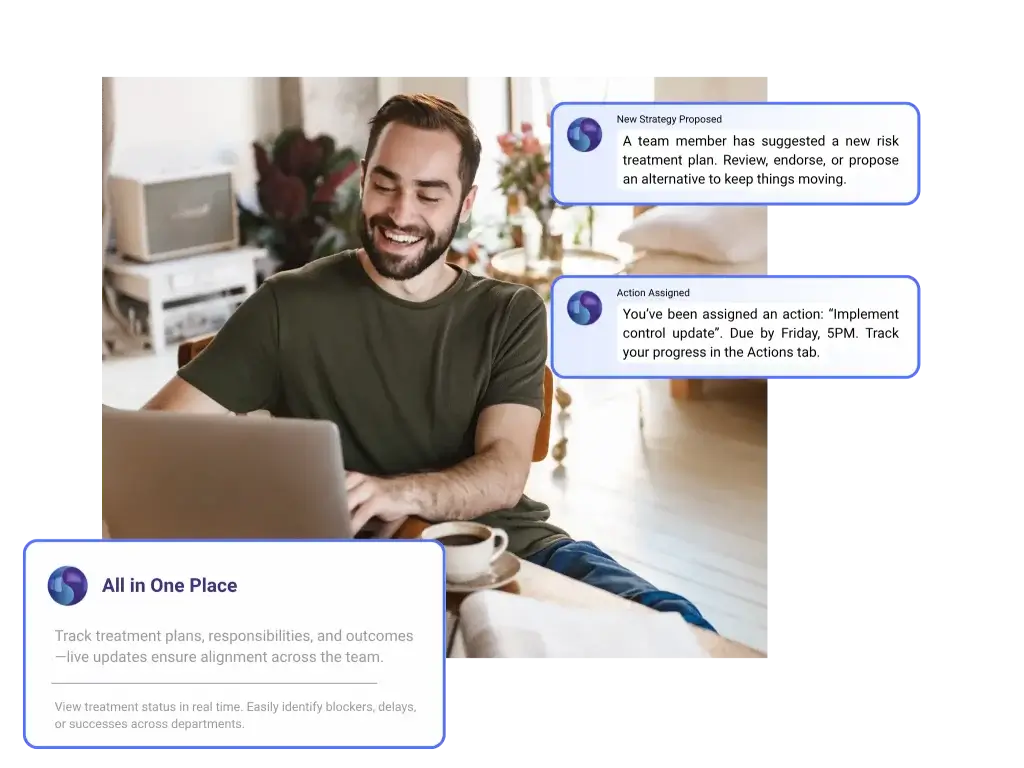
Suggest, discuss, and vote on treatment plans. Build consensus quickly and align mitigation strategies with organisational objectives.
Monitor
Assign action plans, track implementation, and link to the Risk Register
By embedding this four-stage risk management process into your organisation’s workflows, you create a repeatable, transparent, and auditable method for managing risk across any location or department.