
GRC Audit Software
GRC Audit Management Software Guide: What It Is, Why It Matters, and How Symbiant GRC, Risk Management and Audit Solution Simplifies the Process
A practical guide to governance, risk, and compliance (GRC) audits, including the steps involved, common challenges, and best practices — plus how Symbiant streamlines audits with integrated tools for planning, testing, reporting, and action tracking.
From only £100 per module/month for unlimited users*
Take control of your compliance and risk processes
Move beyond spreadsheets and disconnected systems with a flexible platform that centralises your data, tracks actions, and gives you clear visibility across your organisation.
Why GRC Audits Matter in 2025: Compliance, Risk Oversight, and Organisational Resilience
Governance, Risk, and Compliance (GRC) audits have become a critical function for modern organisations. No longer a simple checklist, an effective GRC audit provides holistic oversight across governance structures, risk management practices, and regulatory compliance.
According to recent market research, the global GRC software market is projected to exceed $64 billion by 2025. This reflects the increasing demand for tools that provide transparency, accountability, and assurance in a world of complex risks and evolving regulations.
This guide explains what a GRC audit is, how it works, and the challenges organisations face, while showing how Symbiant’s Audit Management Software streamlines the process with automation, integration, and smart reporting.
What is a GRC Audit? Definition, Meaning, and Purpose
A GRC audit is a structured review of an organisation’s governance, risk management, and compliance framework. It goes beyond the scope of a traditional financial or operational audit by providing a holistic evaluation of policies, processes, and internal controls.
By offering a single source of truth for governance, risk, and compliance, GRC audits help organisations close compliance gaps, improve accountability, and strengthen resilience. Done effectively, they provide assurance not just to regulators but also to boards, stakeholders, and customers.
The goal of a GRC audit is to determine whether your organisation:
- Aligns day-to-day operations with internal policies and external regulations.
- Identifies, assesses, and mitigates risks in line with business objectives.
- Maintains compliance with standards such as ISO 31000, ISO 27001, SOX, and GDPR.
- Protects against data breaches, financial loss, and reputational damage.
Internal vs External GRC Audits: What’s the Difference?
There are two primary types of GRC audits that organisations must consider — internal audits and external audits. Both play a vital role in strengthening governance, risk management, and compliance, but they serve different purposes:
Internal GRC Audits
Internal audits are performed by in-house teams to assess the effectiveness of your organisation’s GRC framework. These reviews help identify weaknesses in policies, risk controls, and compliance processes, ensuring issues are addressed before they escalate. Internal audits also promote continuous improvement by aligning governance practices with strategic objectives.
External GRC Audits
External audits are conducted by independent third-party auditors to provide an impartial review of your GRC environment. They are especially important for regulatory compliance, stakeholder confidence, and demonstrating security and transparency to customers, investors, and regulators.
How Symbiant Helps
Whether preparing for internal or external GRC audits, Symbiant’s Audit Universe, Working Papers, and Audit Action Tracker modules simplify the process. From planning audits and storing evidence to issuing questionnaires and tracking remedial actions, Symbiant provides an integrated audit management platform that ensures your organisation is always ready for scrutiny.
How Does a GRC Audit Work? Step-by-Step Process
A successful GRC audit follows a structured workflow that ensures every aspect of governance, risk management, and compliance is reviewed, tested, and improved. Here’s how the process typically works:
Define the audit’s scope and objectives. Gather key documents such as risk registers, compliance policies, and governance frameworks. Hold an initial meeting with stakeholders to align expectations and outline the audit plan.
Identify and prioritise risks that could impact the organisation’s objectives. Tools such as risk heat maps, SWOT analysis, or ISO 31000-based methods help create a risk profile that guides the audit’s focus areas.
Map out the internal controls that mitigate identified risks. Evaluate their effectiveness, document reviews, and control testing to ensure they work as intended.
4. Evidence and Data Collection
Collect supporting evidence such as logs, policies, reports, and transaction records. Using audit management software like Symbiant’s Audit Working Paperscentralises this process, making evidence easier to manage and link to risks and controls.
5. Testing and Analysis
Perform walkthroughs, sampling, re-performance, and analytical tests to validate control effectiveness. Document any discrepancies, gaps, or weaknesses that emerge.
6. Reporting Findings
Compile results into a clear audit report, including an executive summary, detailed findings, and recommendations. Communicate both strengths and weaknesses so decision-makers have a balanced view.
7. Action Planning
Translate audit findings into corrective actions. Assign responsibility, set deadlines, and create accountability across departments. Symbiant’s Audit Action Tracker automate notifications and progress tracking to ensure follow-through.
8. Follow-Up and Monitoring
Conduct follow-up audits or reviews to confirm corrective measures have been implemented effectively. Continuous monitoring ensures long-term compliance and improved risk management.
Purpose and Benefits of a GRC Audit
A GRC audit is more than a compliance exercise, it is a strategic tool for protecting business integrity, improving risk resilience, and fostering organisational growth and resilience. By reviewing governance, risk, and compliance processes in detail, a GRC audit delivers multiple benefits:
Ensuring Regulatory Compliance
Stay on the right side of the law by confirming that policies, processes, and practices meet regulatory requirements. This reduces the risk of fines, penalties, and legal complications while demonstrating compliance to regulators and stakeholders.
Strengthening Risk Management
A GRC audit puts your risk management framework under the microscope, assessing how well risks are identified, monitored, and mitigated. This helps close gaps, sharpen strategies, and build resilience against emerging threats.
Streamlining Operations
Beyond compliance, audits reveal bottlenecks and redundancies that slow performance. Identifying these inefficiencies allows organisations to optimise workflows, cut costs, and operate more productively.
Building Accountability and Transparency
By clearly defining roles, responsibilities, and governance protocols, GRC audits foster a culture of accountability. This transparency promotes ethical behaviour, informed decision-making, and stakeholder confidence across the organisation.
Driving Continuous Improvement
A GRC audit is not a one-off event. Routine reviews encourage ongoing refinement of governance, risk, and compliance practices, ensuring the business evolves with changing regulations, technologies, and market conditions.
Key Components of a GRC Audit: Governance, Risk, and Compliance
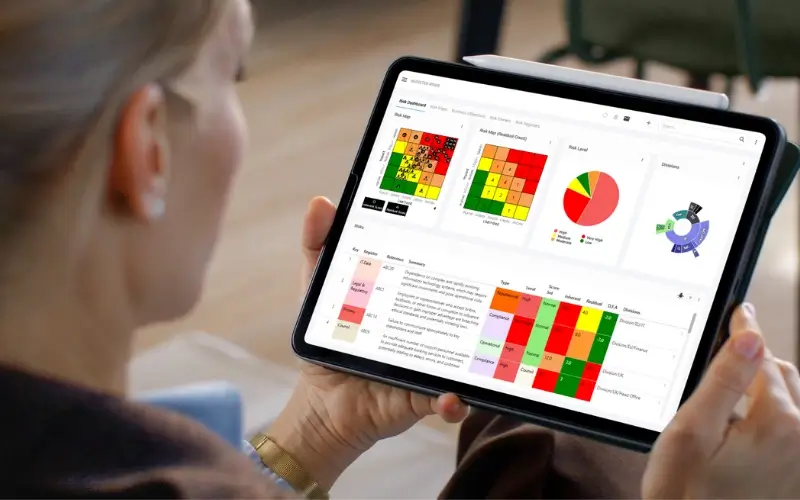
In healthcare and beyond, risk management isn’t a solo task — it’s a team effort. Symbiant’s platform brings together governance, audit, and compliance teams in one shared workspace, giving everyone clear visibility, defined accountability, and the confidence to act quickly when it matters most.
Evaluating Governance Structures in a GRC Audit
Governance is the structural framework that guides decision-making, accountability, and organisational performance. A GRC audit reviews the governance framework to ensure leadership sets the right “tone from the top,” with clear policies, defined responsibilities, and oversight mechanisms. This includes examining:
Board and committee structures.
Leadership effectiveness.
Alignment of mission, vision, and objectives with operational strategy.

Risk Management in GRC Audits: Identifying, Assessing, and Mitigating Threats
Risk management ensures that threats are identified, assessed, and mitigated before they impact business objectives. In a GRC audit, auditors assess how risks are recorded, monitored, and treated. Areas of focus include:
Defined risk appetite and tolerance levels.
Methods of identifying and evaluating risks (e.g., heat maps, ISO 31000).
Risk treatment and response strategies.
Integration of risks into wider decision-making.
Effective risk management helps organisations operate with resilience and agility in the face of uncertainty.
Compliance in GRC Audits: Ensuring Legal, Regulatory, and Policy Adherence
Compliance ensures that the organisation adheres to laws, regulations, internal policies, and industry standards. During a GRC audit, compliance programs are examined to confirm they are both comprehensive and effective. Key areas include:
Internal controls and monitoring mechanisms.
Adherence to frameworks such as ISO 27001, SOX, GDPR, or FCA standards.
The strength of compliance culture across departments.
Robust compliance not only mitigates legal risks but also enhances reputation, trust, and stakeholder confidence.
Common Challenges in GRC Audits
Conducting a GRC audit is rarely straightforward. Organisations face a variety of obstacles that can limit effectiveness, reduce accuracy, and delay results. The most common challenges include:
Inconsistent Data Sources
Data scattered across spreadsheets, legacy systems, and siloed platforms makes it difficult to aggregate and analyse information. This fragmentation often leads to gaps in data, undermining the accuracy and reliability of audit findings.
Resource Constraints
Many organisations lack the time, budget, or skilled personnel required for comprehensive audits. Limited resources can result in rushed assessments, overlooked issues, and reduced audit quality.
Cultural Silos and Resistance
Departments working in isolation may resist cross-functional collaboration during audits. Without alignment, valuable insights are missed, and the audit lacks the holistic view needed for effective governance and risk oversight.
Emerging and Evolving Risks
New risks, from cyber threats to regulatory changes, constantly appear. Identifying, assessing, and mitigating these threats proactively is challenging, requiring organisations to remain agile and regularly update their risk management strategies.
Legacy Technology Limitations
Older systems often lack integration with modern GRC tools. Manual data collection and workarounds increase the likelihood of errors, slow down the audit process, and make it harder to provide real-time insights.
Cybersecurity Blind Spots
With cyber threats evolving rapidly, audit teams often struggle to assess whether current controls are sufficient. Undetected vulnerabilities leave organisations exposed to breaches, financial losses, and reputational damage.
Internal vs External GRC Audits: What’s the Difference?
Key Capabilities of Symbiant’s Audit Management Software
Audit Action Tracker
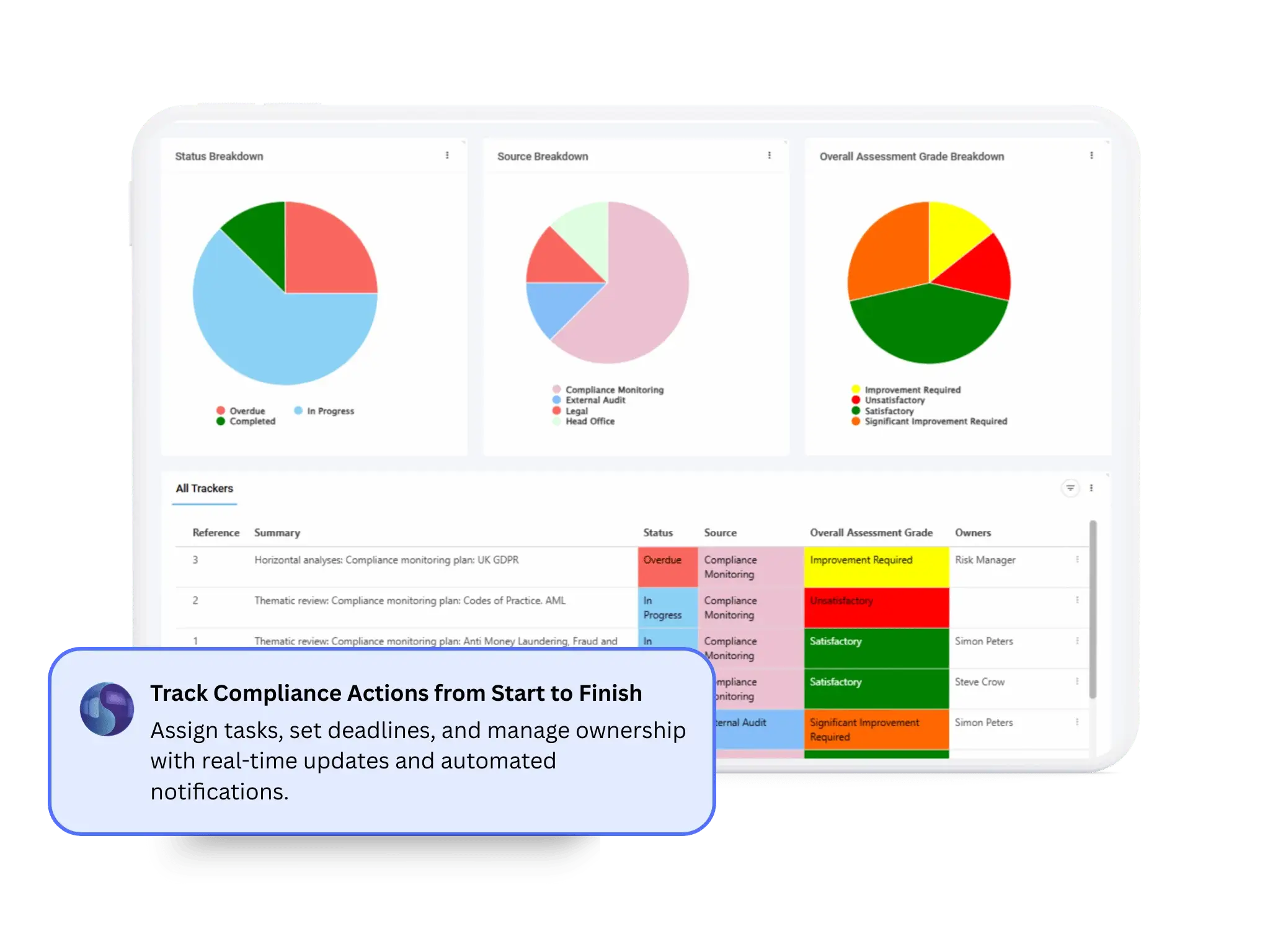
Symbiant enables complete control and visibility over audit follow-ups. Findings can be assigned, tracked, and escalated automatically, with real-time accountability built into every step. No more disconnected spreadsheets or lost actions—just a clear, documented path from issue to resolution.
Working Papers Module
Capture and organise audit evidence in a structured, centralised system. Symbiant’s working papers ensure consistency across audits, enable secure collaboration between team members, and maintain a full version history to support transparency and compliance. Auditors can link evidence directly to risks, controls, and findings—streamlining both internal workflows and external reviews.
Risk-Based Audit Assessments
Design and deliver audits that focus on what matters most. Symbiant supports fully customisable assessment templates and scoring models, empowering your team to align audits with enterprise risk priorities, regulatory requirements, and strategic goals. By focusing on high-risk areas, you improve both audit impact and resource efficiency.
Real-Time Dashboards and Reporting
Symbiant turns complex audit data into actionable intelligence. Custom dashboards provide senior leaders and audit teams with up-to-date insights into audit status, outstanding risks, overdue actions, and emerging trends—enabling timely intervention and informed decision-making.
Trusted by Professionals. Tested Across Sectors. Truly Versatile.
Symbiant isn’t just another GRC platform or audit tool, it’s the solution trusted by the professionals who define industry standards and regulatory compliance.
- Powerful – Symbiant is used by professional auditing firms and internal auditors to manage their own risk and audit files. When precision and reliability matter most, the experts choose Symbiant’s intelligent, logic-based functionality.
- Credible – We are proud to be the only GRC solution endorsed and actively used by professional accountancy bodies. Symbiant meets the highest standards of compliance, integrity, and performance—earning the trust of those who lead the profession.
- Affordable – Symbiant brings enterprise-grade features to organisations of every size. From leading charities to public sector teams, our pricing model ensures powerful audit and risk management software remains accessible—without compromising quality.
- Agile – Built to adapt across all industries, Symbiant is used in financial services, education, healthcare, manufacturing, and government. Our modular platform flexes to fit your structure, supporting scalable, sustainable risk and compliance programmes.
With over 26 years of innovation in governance, risk, and compliance, Symbiant remains the platform of choice for organisations that demand flexibility, credibility, and performance, all in one affordable package.
Responsible Innovation: Augmenting Auditors with AI, Not Replacing Them
Since 1999, Symbiant has stood at the intersection of deep industry knowledge and cutting-edge technology. With over two decades of expertise in governance, risk, and compliance, we’ve continuously evolved to meet the changing needs of audit and risk professionals.
Today, that legacy meets innovation through AI-assisted insight—designed not to replace auditors, but to enhance their impact.
By combining our proven methodologies with intelligent automation, Symbiant delivers smarter software that adapts to the real-world complexities of risk and audit management. It’s not just about features—it’s about giving professionals the clarity, confidence, and control they need to make better decisions, faster.
Symbiant takes a measured, human-centric approach to emerging technology. While some systems promise fully automated audits, Symbiant’s focus is on AI-assisted auditing—augmenting human expertise, not replacing it.
The platform’s AI assistant operates by suggesting relevant controls, linking risks across modules, and analysing patterns in audit findings. It is fully compliant with data privacy standards, does not store user data, and never trains on client information. The goal is to streamline administrative tasks and enhance decision-making, while keeping auditors firmly in control.
Build a Solution Around Your Standards, Not the Other Way Around
Symbiant’s agile, modular platform is designed to align with industry standards and adapt to your organisation’s unique requirements. Whether you’re working towards ISO accreditation, regulatory compliance, or a specialised framework, our flexible approach helps you create a solution that fits your needs today and evolves with you tomorrow. If an existing module doesn’t fully support your requirements, we can tailor a module or build a bespoke solution designed around your exact processes and standards.
Ready to create a platform tailored to your requirements?

Pricing Disclaimer
* Modules are charged at a standard monthly fee, not on a per-user basis. All users can access each module at any required level. Please note that costs exclude VAT, AI features, and additional modules you may wish to use. User seats are required.