
Operational Risk Intelligence
How Incidents Reveal Hidden Risks in Organisations
Take control of your compliance and risk processes
Move beyond spreadsheets and disconnected systems with a flexible platform that centralises your data, tracks actions, and gives you clear visibility across your organisation.
How Incidents Reveal Weaknesses in Processes, Controls and Oversight
Incidents are often viewed as isolated events, something that went wrong, was investigated, and resolved. However, in effective risk management frameworks, incidents are far more valuable than that. They act as signals that reveal hidden weaknesses in processes, controls, and organisational oversight.
When analysed properly, incidents can uncover risks that were never identified during formal risk assessments. They may highlight gaps in internal controls, weaknesses in operational procedures, or emerging threats that were previously underestimated.
For this reason, modern risk management frameworks treat incident data as a critical input into the broader risk management process. By linking incidents with risk registers, controls, and remediation actions, organisations can transform individual events into valuable insights that strengthen their overall risk posture.
Why Incidents Matter in Risk Management
Every operational incident, whether major or minor, provides evidence about how processes perform in real-world conditions. While risk assessments aim to anticipate potential threats, incidents demonstrate how those risks actually materialise.
Incidents may reveal:
previously unidentified operational risks
weaknesses in existing controls
emerging patterns of system or process failure
recurring issues across departments or teams
hidden dependencies between business processes
Without structured incident management and analysis, these signals are often lost, leaving organisations exposed to repeating failures.
Why Incidents Matter in Risk Management
Incidents rarely occur in isolation. In many cases, a single operational event is simply the visible outcome of deeper organisational risks.
When organisations investigate incidents purely as standalone events, they miss the opportunity to identify the systemic risks driving those outcomes.
By contrast, linking incidents to a structured risk framework enables organisations to understand the broader risk environment and prioritise mitigation efforts.
| Incident | Hidden Risk |
|---|---|
| System outage | Weak IT change management process |
| Data breach | Inadequate access controls |
| Customer complaint escalation | Process breakdown in service delivery |
| Health & safety incident | Insufficient training or oversight |
Why Near Misses Are Especially Valuable
Effective incident investigation focuses not only on what happened, but why it happened.
Root cause analysis helps organisations move beyond surface-level explanations and uncover the underlying drivers of incidents.
Common investigation approaches include:
Root Cause Analysis (RCA)
Process analysis
Control effectiveness reviews
Incident trend analysis
Cross-departmental incident reviews
This deeper analysis helps identify hidden risk factors such as process weaknesses, insufficient controls, or gaps in organisational oversight.
Linking Incidents to Risk Registers
One of the most effective ways to extract value from incident data is to connect incidents directly to the organisation’s risk management framework.
When incidents are linked to risk registers, organisations can:
identify risks that were previously unrecorded
reassess the likelihood and impact of existing risks
detect recurring operational failures
monitor trends across departments or processes
This connection allows incident data to continuously improve the accuracy and relevance of the risk register, ensuring it reflects real operational conditions rather than theoretical assumptions.
How Incidents Reveal Control Weaknesses
Incidents frequently occur because a control did not operate as intended.
This may happen because:
the control was poorly designed
the control was not consistently applied
the control was bypassed
the control was ineffective against emerging risks
By analysing incidents alongside control frameworks, organisations can evaluate whether existing controls are genuinely reducing risk or simply creating administrative overhead.
When weaknesses are identified, controls can be strengthened, redesigned, or replaced to prevent similar incidents in the future.
From Incident Insight to Risk Mitigation
The true value of incident management lies in its ability to drive continuous improvement.
When incident data feeds directly into risk management processes, organisations can:
update risk assessments
strengthen internal controls
prioritise mitigation actions
allocate resources more effectively
improve organisational resilience
This feedback loop ensures that every incident contributes to a stronger, more informed risk management framework.
Supporting Incident and Risk Analysis with Integrated GRC Systems
Many organisations still manage incidents, risks, and controls across disconnected systems or spreadsheets. This fragmentation makes it difficult to identify patterns, link incidents to risks, or analyse control effectiveness.
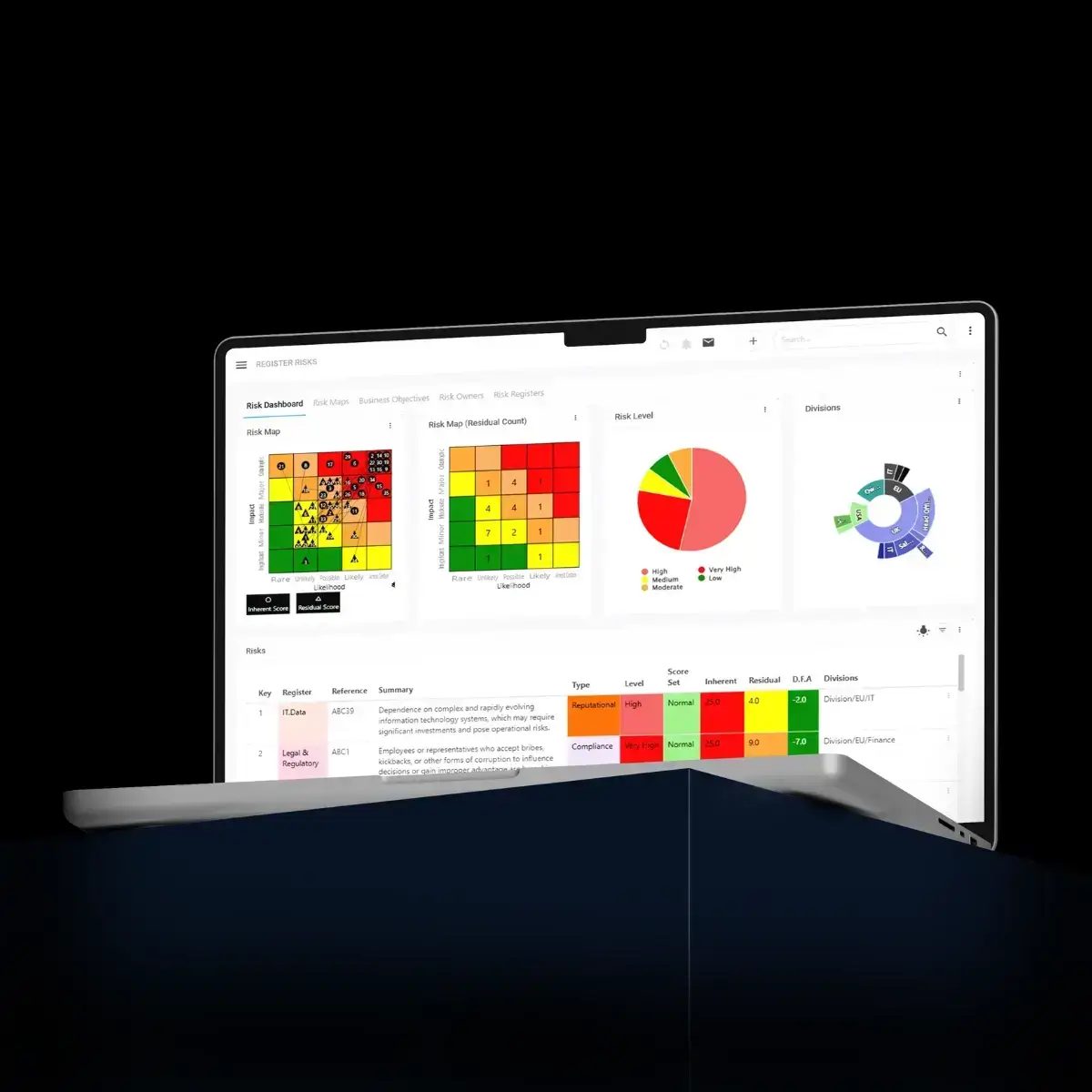
Modern GRC platforms enable organisations to capture incidents within a structured environment and connect them directly to related risks, controls, and remedial actions. This integrated approach provides clearer visibility into emerging threats and strengthens organisational oversight.
For example, incidents can be logged and analysed alongside risk registers and control frameworks, allowing risk managers to identify recurring issues, detect hidden threats, and coordinate mitigation efforts across the organisation.
Turning Incidents into Strategic Risk Intelligence
Incidents should never be treated as isolated operational failures. Instead, they should be viewed as valuable intelligence that reveals hidden risks and strengthens organisational resilience.
By capturing incidents, analysing root causes, and linking findings to risk registers and controls, organisations can transform operational events into actionable insights that improve risk management over time.
When incident data becomes part of a structured risk management framework, organisations gain a clearer understanding of their risk environment and are better equipped to prevent future failures.
Turn Every Incident into Actionable Risk Intelligence
Every incident provides an opportunity to strengthen your organisation’s risk management framework. Symbiant connects incidents with risks, controls, actions and audits, giving you complete visibility into emerging threats while helping prevent repeat failures.
Discover how Symbiant’s Incident Management Software transforms operational events into connected risk intelligence.

Pricing Disclaimer
* Modules are charged at a standard monthly fee, not on a per-user basis. All users can access each module at any required level. Please note that costs exclude VAT, AI features, and additional modules you may wish to use. User seats are required.