
Operational Risk & Governance
Operational Failure Management: Identifying, Investigating and Preventing Organisational Failures
Operational failures rarely appear suddenly. They often begin as small warning signals, a complaint, an incident, or a control that stops working.
Operational failure management helps organisations detect these issues early, investigate their causes, and prevent them from recurring. By connecting complaints, incidents, control failures and risk data, organisations gain the visibility needed to manage operational risk more effectively.
Take control of your compliance and risk processes
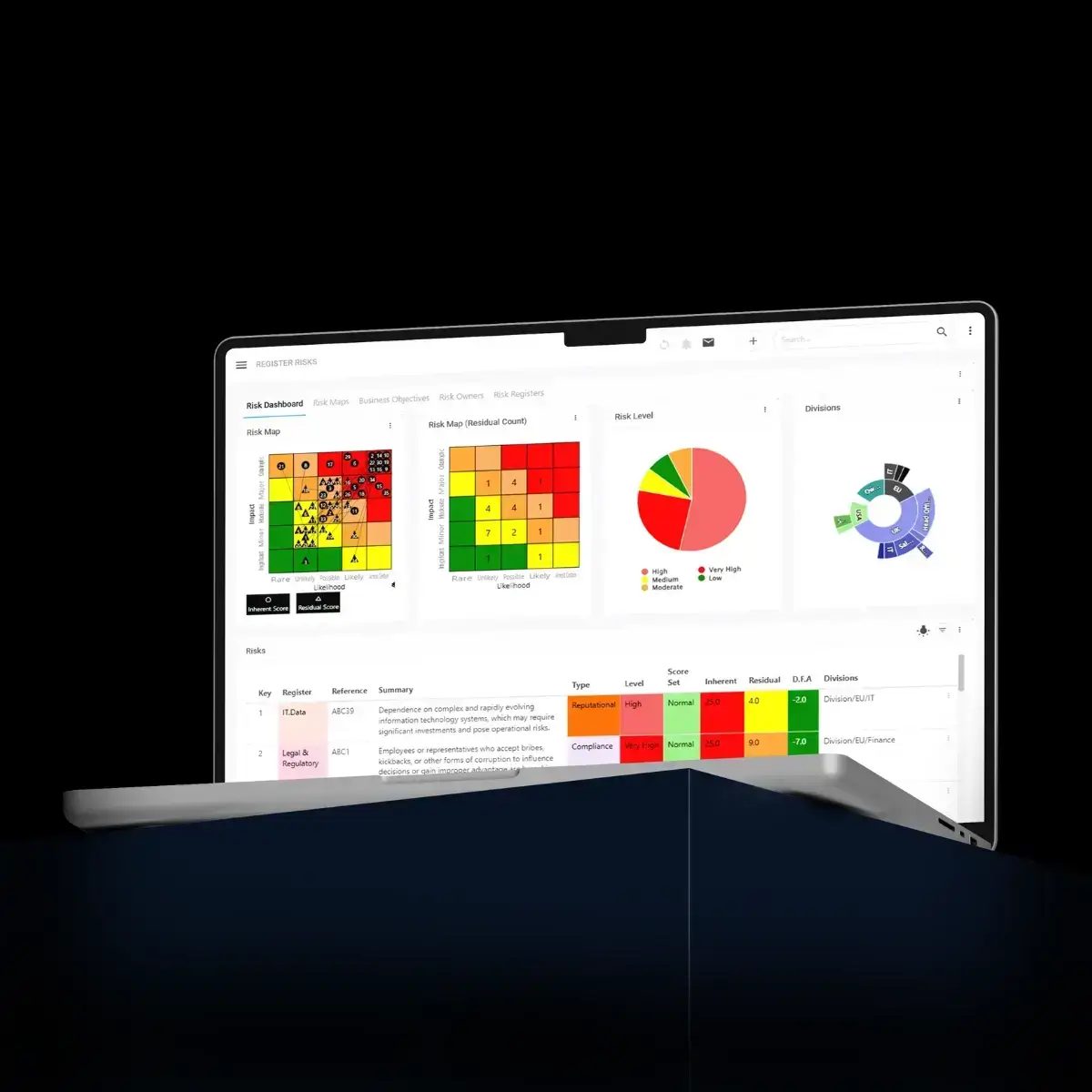
Move beyond spreadsheets and disconnected systems with a flexible platform that centralises your data, tracks actions, and gives you clear visibility across your organisation.
Why Operational Failure Management Matters
Operational failures rarely begin as major crises. They often start as small warning signals, a customer complaint, an operational incident, or a control that quietly stops working.
When these signals remain isolated across departments and systems, organisations struggle to see the bigger picture. Complaints sit in customer service tools, incidents are logged elsewhere, and risk registers remain disconnected from operational events.
Operational failure management provides the structure organisations need to identify these issues early, investigate their causes, and prevent them from recurring.
By connecting complaints, incidents, control failures and risk data into a single governance framework, organisations can move from reactive problem solving to proactive risk management.
What Is Operational Failure Management
Operational failure management refers to the structured process organisations use to detect, investigate, document and resolve operational breakdowns that could affect customers, compliance, or organisational objectives.
These failures may arise from:
- process breakdowns
- internal control failures
- operational incidents
- regulatory breaches
- customer complaints
Without a structured approach, these events often remain fragmented across different systems and departments.
Why Operational Failures Are a Major Governance Risk
Operational failures can have significant consequences, particularly in regulated sectors.
Common impacts include:
- customer harm
- regulatory penalties
- reputational damage
- financial losses
- operational disruption
For regulators and auditors, the critical question is not simply whether failures occur, but how organisations detect, investigate and prevent them.
This is why many governance frameworks now emphasise structured incident management, complaint handling, and internal control monitoring.
The Four Primary Sources of Operational Failures
Operational failures typically originate from four core sources.
Customer complaints
Complaints often reveal underlying operational problems that were previously unnoticed. A single complaint may indicate broader systemic issues affecting multiple customers or processes.
Operational incidents
Incidents such as service outages, process errors, or security breaches represent immediate operational breakdowns that require investigation and remediation.
Control failures
Internal controls exist to reduce risk. When these controls fail, due to poor design, ineffective monitoring, or human error, operational risks increase significantly.
Process breakdowns
Inefficient or poorly designed processes can introduce vulnerabilities that eventually lead to incidents, complaints, or regulatory breaches.
Examples of Operational Failures in Organisations
Understanding operational failures becomes easier when viewed through real-world examples.
Examples include:
- A control designed to verify financial transactions stops functioning, allowing incorrect payments to be processed.
- A data handling process fails, resulting in a privacy incident.
- A customer complaint reveals a recurring billing error affecting multiple accounts.
- A system outage disrupts services for customers or employees.
Each of these events may appear isolated at first, but they often share common underlying causes.
Why Organisations Struggle to Identify Operational Failures
Many organisations struggle with operational failure management because information is scattered across multiple systems.
For example:
- complaints stored in CRM systems
- incidents logged in operational tools
- controls monitored separately
- risk registers maintained independently
This fragmentation makes it difficult to understand how events relate to each other.
Without visibility across these areas, organisations may repeatedly address symptoms while failing to identify the root cause.
Examples of Operational Failures in Organisations
Understanding operational failures becomes easier when viewed through real-world examples.
Examples include:
- A control designed to verify financial transactions stops functioning, allowing incorrect payments to be processed.
- A data handling process fails, resulting in a privacy incident.
- A customer complaint reveals a recurring billing error affecting multiple accounts.
- A system outage disrupts services for customers or employees.
Each of these events may appear isolated at first, but they often share common underlying causes.
The Role of Root Cause Analysis in Operational Failure Management
Investigating operational failures requires more than resolving the immediate issue.
Organisations must understand why the failure occurred and whether similar issues could arise elsewhere.
Root cause analysis techniques such as:
- the 5 Whys method
- fishbone analysis
- trend analysis across incidents and complaints
- help organisations identify systemic weaknesses rather than isolated errors.
How Modern GRC Platforms Create a Single Source of Truth
Effective operational failure management requires organisations to connect data from complaints, incidents, controls and risks into a unified system.
Modern Governance, Risk Management and Compliance (GRC) platforms help achieve this by creating a single source of truth (SSOT) , where operational events can be logged, investigated, and linked to broader risk management activities.
By integrating these areas, organisations gain a clearer understanding of how operational failures affect their overall risk profile and governance framework.
This process allows organisations to implement corrective actions that reduce the likelihood of recurring failures.
How Symbiant GRC and Audit Platform Supports Operational Failure Management
Symbiant Governance, Risk Management, Compliance (GRC) and Audit Software provides organisations with a flexible and modular GRC platform designed to support the identification, investigation, and management of operational failures.
Through its integrated modules, organisations can:
- log and investigate complaints
- document operational incidents
- monitor and test internal controls
- link events to risk registers
- track remedial actions and corrective measures
Because information can be shared across modules, organisations gain a clearer view of how individual events relate to broader operational risks.
This approach allows organisations to build a structured and auditable framework for managing operational failures across the organisation.
Building a More Resilient Organisation
Operational failures cannot be eliminated entirely. However, organisations that detect issues early, investigate them thoroughly, and implement corrective actions consistently are far better positioned to manage risk and maintain operational resilience.
A structured operational failure management framework enables organisations to move beyond reactive responses and instead build a proactive governance environment that continuously improves over time.

Pricing Disclaimer
* Modules are charged at a standard monthly fee, not on a per-user basis. All users can access each module at any required level. Please note that costs exclude VAT, AI features, and additional modules you may wish to use. User seats are required.