
ROPA Software
ROPA Software for GDPR & UK GDPR Article 30 Compliance
A Record of Processing Activities (ROPA) is a core requirement of UK GDPR and EU GDPR, helping organisations document exactly how personal data is collected, used, shared, stored, and deleted. While many businesses still rely on spreadsheets, maintaining an accurate and audit-ready ROPA quickly becomes difficult as processing activities, systems, and regulations evolve.
This guide explains what a ROPA is, who needs one under Article 30 GDPR, and how a connected, digital approach can simplify compliance. With Symbiant’s ROPA Software, organisations can centralise processing records, link them directly to DPIAs, risk registers, actions and supporting evidence, creating a living record that is always current, defensible, and ready for regulatory scrutiny.
Compliance
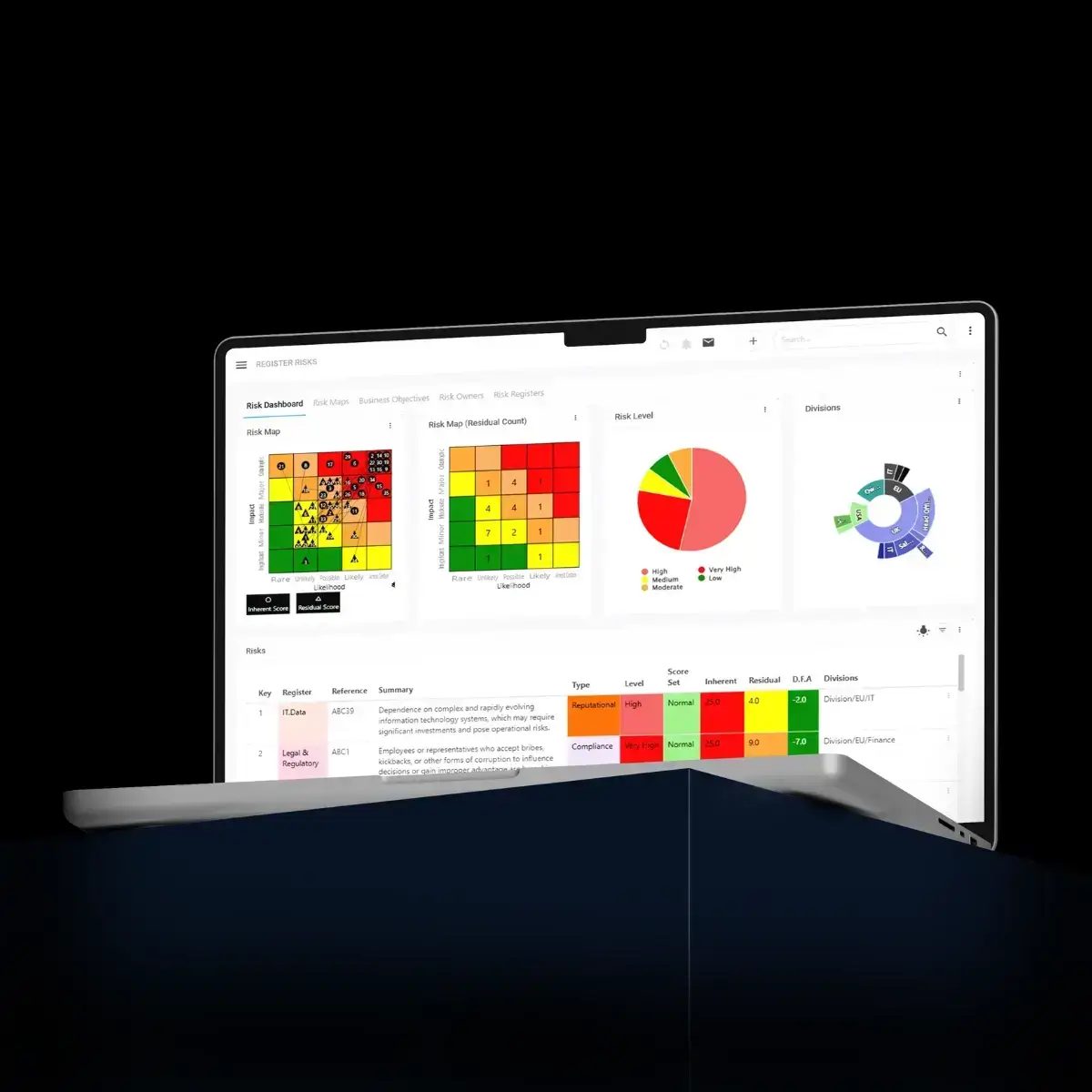
Take control of your compliance and risk processes
Move beyond spreadsheets and disconnected systems with a flexible platform that centralises your data, tracks actions, and gives you clear visibility across your organisation.
What is a ROPA and When Do You Need One?
A Record of Processing Activities (ROPA) is a structured document that records every way your organisation collects, uses, stores, shares, and protects personal data.
It provides a clear, internal view of your data processing, from the moment data is collected through to deletion or anonymisation.
Under Article 30 of the GDPR, most organisations operating in or targeting the UK and EU are required to maintain a ROPA.
While there is a limited exemption for organisations with fewer than 250 employees, this only applies where processing is:
- Truly occasional
- Unlikely to pose a risk to individuals’ rights and freedoms
- Not involving special category data or criminal offence data
In practice, this exemption is rarely applicable.
If your organisation:
- Runs payroll
- Sends marketing communications
- Uses analytics tools (e.g. website tracking)
- Maintains customer or employee records
then you are almost certainly required to maintain a ROPA.
A ROPA is often the first document regulators request, because it answers a fundamental question: What data do you process, where is it, and why?
Legal Requirements Under Article 30 GDPR: Are You Truly Exempt?
While Article 30 of the UK and EU GDPR was designed with a small business exemption, the reality of modern data processing means that almost no organisation is truly exempt. A Record of Processing Activities (ROPA) is not just a nice-to-have internal document; it is a mandatory, written account of your data ecosystem that must be produced immediately upon request by supervisory authorities like the ICO.
The 250-Employee Myth
Many organisations mistakenly believe they are exempt because they have fewer than 250 employees. However, the legislation includes three critical triggers that override the headcount rule. You must maintain a ROPA if any of the following apply:
- Processing is Not Occasional: This is the most common pitfall. If a data processing activity is part of your regular business routine, it is not occasional.
- Risk to Rights and Freedoms: If the processing could potentially result in physical, material, or non-material damage to an individual (such as discrimination, identity theft, or financial loss), a record is mandatory.
- Special Category Data: If you handle “sensitive” information—including health data, trade union membership, ethnic origin, or criminal convictions—the exemption is immediately void.
Defining Occasional: The Regulatory Reality Check
Regulatory guidance has set a high bar for what qualifies as occasional. If an activity is a standard part of your business model or administrative function, it must be documented. Most SMEs fail the occasional test because they perform the following daily:
- HR & Payroll: Processing employee data, tax details, and pension contributions.
- Digital Presence: Operating a website that uses cookies or collects lead generation data.
- Marketing & CRM: Maintaining a database of prospects or sending regular newsletters.
- Security: Operating CCTV or digital access control systems.
The Shift from Compliance to Accountability
Under the GDPR’s Accountability Principle, the burden of proof lies with you. If a regulator investigates a breach or a complaint, the absence of a ROPA is often seen as the first sign of systemic negligence.
Symbiant’s ROPA software ensures that you don’t just meet the bare minimum of the law, but that you have a living record that protects your organisation during audits. By moving your Article 30 records into a structured digital environment, you transform a legal burden into a strategic asset that provides total visibility over your data footprint.
The Strategic Value of a Digital ROPA
While the law requires a written record, maintaining this in a static Excel spreadsheet is a recipe for non-compliance. Data environments change daily. Symbiant’s ROPA Software transforms this static requirement into a dynamic asset. By centralising your records, you can link your ROPA directly to Data Protection Impact Assessments (DPIAs) and Risk Registers, ensuring that your compliance posture is always up-to-date and audit-ready.
How to Create and Maintain a GDPR-Compliant ROPA
Creating a Record of Processing Activities (ROPA) is more than completing a template. To remain compliant with Article 30 UK GDPR and EU GDPR, your ROPA should accurately reflect how personal data flows throughout your organisation and evolve as your processing activities change.
A structured, digital approach makes this significantly easier than maintaining disconnected spreadsheets.
1. Identify All Processing Activities
Start by documenting every activity involving personal data. This includes HR processes, customer records, marketing communications, supplier management, CCTV, website analytics, payroll, and any third-party services that process personal information on your behalf.
2. Record the Purpose and Legal Basis
For each processing activity, clearly define why the data is being processed and identify the appropriate lawful basis under GDPR, such as consent, contractual necessity, legal obligation, legitimate interests, or another applicable basis.
3. Document the Personal Data Being Processed
Record the categories of personal data involved, the categories of data subjects, recipients of the data, processors, and whether information is transferred outside the UK or European Economic Area.
4. Define Retention Periods and Security Measures
Your ROPA should document how long personal data is retained and the technical and organisational measures used to protect it, including encryption, access controls, backups, and other security controls.
5. Link Processing Activities to Risks and DPIAs
Not every processing activity requires a Data Protection Impact Assessment (DPIA), but higher-risk processing should be directly linked to one. Connecting your ROPA with DPIAs, risk registers, incidents and actions creates a far more complete picture of your compliance posture and simplifies regulatory reporting.
6. Keep Your ROPA Under Continuous Review
A ROPA should be treated as a living document rather than a one-off compliance exercise. New systems, suppliers, projects and business processes should automatically feed into your records so they remain accurate, complete and audit-ready.
With Symbiant’s ROPA Software, organisations can centralise processing activities and link them directly to DPIAs, Risk Registers, Compliance Monitoring, Document Management and Action Tracking, creating a single source of truth for data protection compliance.
Benefits of ROPA Software
Maintaining a Record of Processing Activities in spreadsheets may satisfy the minimum legal requirement initially, but it quickly becomes difficult to keep accurate as organisations grow. A dedicated ROPA solution provides far greater visibility, consistency and accountability across your compliance programme.
Using Symbiant’s ROPA Software enables organisations to:
Replace spreadsheets with a centralised, structured Record of Processing Activities.
Demonstrate GDPR accountability with complete, auditable records.
Respond more quickly and confidently to ICO enquiries and regulatory audits.
Link processing activities directly to DPIAs, Risk Registers and compliance actions.
Reduce duplicated administration by maintaining a single source of truth.
Improve collaboration across departments responsible for personal data.
Track reviews, updates and ownership through automated workflows.
Maintain an up-to-date audit trail that reflects changes across the organisation.
Rather than treating your ROPA as a standalone document, Symbiant connects it with the wider governance, risk and compliance ecosystem, helping organisations manage privacy obligations more efficiently while reducing compliance risk.
Turn Your ROPA Into a Living Compliance Record

Pricing Disclaimer
* Modules are charged at a standard monthly fee, not on a per-user basis. All users can access each module at any required level. Please note that costs exclude VAT, AI features, and additional modules you may wish to use. User seats are required.