
Risk Incident Management Software
The Incident Management Lifecycle: From Reporting to Resolution
Most organisations begin incident reporting in a spreadsheet. At first, it seems like a simple and cost-effective way to log incidents, assign actions and maintain records. But as organisations grow, so do the number of incidents, investigations, corrective actions and regulatory expectations, making spreadsheets increasingly difficult to manage.
This guide explores the limitations of spreadsheet-based incident tracking, why connected incident management is essential for modern governance and operational resilience, and how organisations can improve visibility, accountability and decision-making with a centralised incident management platform like Symbiant.
Take control of your compliance and risk processes
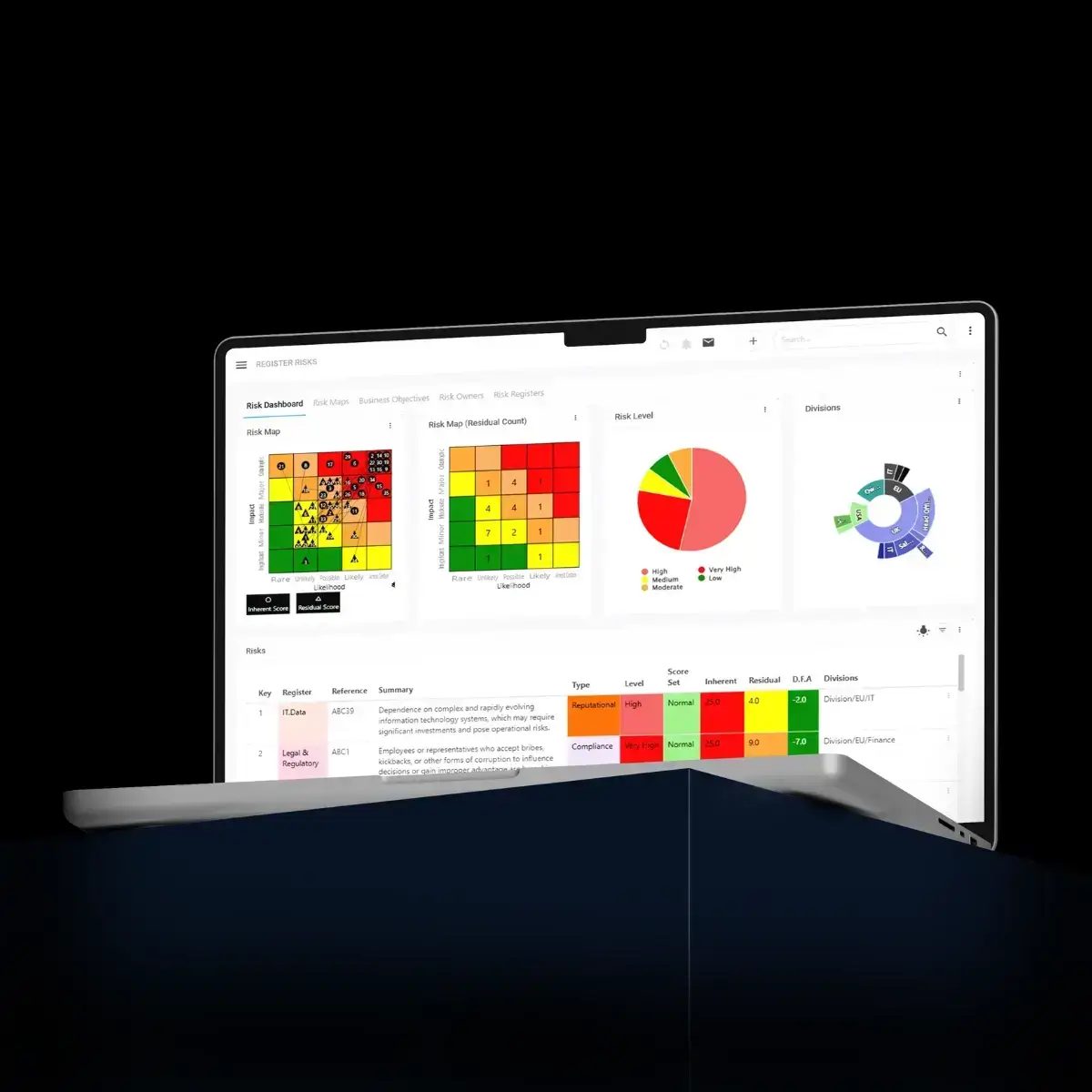
Move beyond spreadsheets and disconnected systems with a flexible platform that centralises your data, tracks actions, and gives you clear visibility across your organisation.
Spreadsheets Were Never Designed for Modern Incident Management
For many organisations, spreadsheets are often the starting point for incident reporting.
A simple file is created. A few columns are added. Incidents begin filling rows. Initially, the process appears manageable, familiar and cost-effective.
But as organisations grow, operational complexity increases.
More teams become involved. More incidents are reported. More corrective actions need tracking. More regulatory expectations emerge. What once seemed like a practical solution gradually becomes a fragmented process spread across spreadsheets, email chains and disconnected folders.
The issue is not that spreadsheets are bad tools.
The issue is that they were never designed to support connected incident management, operational resilience or governance oversight.
Limited Visibility Delays Response
Spreadsheet-based incident reporting often creates operational blind spots.
Incident information may sit within shared drives, email attachments or isolated files maintained by different teams. As incidents move through investigations, reviews and corrective actions, visibility becomes fragmented and difficult to maintain.
This lack of centralised oversight can delay:
- incident escalation
- corrective action assignment
- management awareness
- operational response
- follow-up investigations
In fast-moving operational environments, delayed visibility increases the risk of recurring issues, unresolved actions and wider business disruption.
Modern organisations require real-time operational awareness, not static files updated manually after the event.
Version Control Creates Governance Challenges
One of the most common problems with spreadsheet-based incident tracking is version control.
Multiple copies of the same file begin circulating across departments. Updates are made independently. Attachments become separated from the original record. Corrective action statuses become inconsistent.
Over time, organisations can lose confidence in the accuracy of their own incident data.
This creates wider governance concerns, including:
- duplicate records
- incomplete investigations
- conflicting information
- outdated remediation updates
- unreliable reporting
- weak audit traceability
When incidents, actions and reviews are spread across disconnected files, maintaining a clear evidential history becomes increasingly difficult.
Corrective Actions Become Difficult to Manage
Effective incident management does not end when an incident is reported.
Investigations, reviews, corrective actions and follow-up activities all require coordination, accountability and oversight.
Spreadsheets struggle to support these structured workflows effectively.
Many organisations attempt to track actions through additional columns, comments or separate files. However, as incidents increase, these processes quickly become difficult to manage consistently.
This often results in:
- unclear ownership
- missed deadlines
- inconsistent follow-up
- limited accountability
- delayed remediation activities
Without automated workflows and structured oversight, organisations risk allowing important issues to remain unresolved longer than expected.
Hidden Patterns and Emerging Risks Remain Unnoticed
Incident data should do more than record events.
It should help organisations identify trends, recurring weaknesses and emerging operational risks before they escalate into larger problems.
However, extracting meaningful operational insight from spreadsheets is often time-consuming and heavily dependent on manual analysis.
As a result, many organisations collect incident data without gaining meaningful visibility into:
- recurring operational failures
- increasing near misses
- control weaknesses
- departmental trends
- emerging compliance concerns
- interconnected operational risks
When operational insight remains hidden inside disconnected spreadsheets, opportunities for prevention are easily missed.
Incident Reporting Is More Than Record Keeping
Modern incident management is not simply an administrative process.
It is a critical component of governance, operational resilience and connected risk management.
Incidents provide valuable operational insight into:
- how risks materialise
- whether controls are effective
- where operational weaknesses exist
- how quickly organisations respond
- whether corrective actions are completed effectively
When incidents are disconnected from wider governance processes, organisations lose the opportunity to strengthen resilience and improve decision-making across the business.
Why Connected Incident Management Matters
Modern organisations require more than isolated incident logs.
They need connected visibility across incidents, risks, controls, corrective actions, audits and operational resilience activities.
A connected incident management approach enables organisations to:
- improve operational oversight
- strengthen accountability
- coordinate response activities
- support governance reviews
- identify recurring issues earlier
- improve resilience maturity
- maintain audit-ready traceability
This is where incident management evolves from reactive reporting into connected operational intelligence.
Spreadsheet Incident Tracking vs Connected Incident Management Software
| Spreadsheet-Based Reporting | Connected Incident Management |
|---|---|
| Manual updates | Automated workflows |
| Siloed files and folders | Centralised Single Source of Truth |
| Limited visibility | Real-time dashboards and reporting |
| Difficult action tracking | Structured remediation workflows |
| Weak audit traceability | Complete audit-ready history |
| Fragmented communication | Connected collaboration |
| Static records | Live operational insight |
| Manual trend analysis | Dynamic filtering and reporting |
How Symbiant Helps Organisations Move Beyond Spreadsheets
Symbiant’s Incident Reporter Module provides a secure, centralised platform for capturing, managing and reviewing operational incidents within a connected GRC ecosystem.
Incidents can be linked directly to:
The platform supports configurable workflows, automated notifications, cumulative dashboard filtering, corrective action tracking and complete audit traceability, helping organisations strengthen visibility, accountability and operational resilience across the business.
Rather than operating as isolated records inside spreadsheets, incidents become connected sources of operational insight that support stronger governance and more informed decision-making.
Transform Incident Reporting Into Connected Operational Intelligence
Move beyond fragmented spreadsheets with a connected platform designed to improve visibility, accountability and operational resilience across your organisation with Symbiant’s agile, highly trusted, fully customisable GRC software at the most competitive price on the market.
What Should Incident Management Software Include?
Replacing spreadsheets with software is only part of the solution. An effective incident management system should support the entire incident lifecycle, from initial reporting through investigation, corrective action and organisational learning.
Key capabilities to look for include:
Centralised Incident Reporting
Provide employees with a single location to report incidents, near misses and operational events, ensuring information is captured consistently across the organisation.
Automated Workflows and Notifications
Automatically assign investigations, corrective actions and reviews to the appropriate people while keeping stakeholders informed through reminders and status updates.
Corrective Action Tracking
Ensure every action has a clear owner, target date and progress status, helping organisations improve accountability and prevent actions from being overlooked.
Connected Risk and Control Management
Link incidents directly to Risk Registers, controls, audits and Business Continuity Plans, providing complete visibility into how operational events affect wider governance and risk management.
Reporting and Trend Analysis
Use dashboards and filtering tools to identify recurring incidents, emerging risks, departmental trends and operational weaknesses before they develop into larger issues.
Complete Audit Trail
Maintain a secure, time-stamped history of every incident, investigation, review, document and corrective action, providing clear evidence for internal governance and regulatory inspections.
By moving beyond disconnected spreadsheets to a connected incident management platform, organisations gain greater visibility, stronger accountability and better operational resilience.
Move Beyond Spreadsheet Incident Tracking
Spreadsheets were never designed to support modern incident management. Symbiant’s Incident Reporter connects incidents with risks, controls, audits, corrective actions and business continuity activities, giving your organisation complete operational visibility from a single, connected platform.
Replace fragmented reporting with a fully configurable incident management solution that improves accountability, strengthens resilience and keeps your organisation audit-ready.

Pricing Disclaimer
* Modules are charged at a standard monthly fee, not on a per-user basis. All users can access each module at any required level. Please note that costs exclude VAT, AI features, and additional modules you may wish to use. User seats are required.