

Every organisation operates with risk. Changes to technology, regulation, suppliers, people, processes and strategic objectives continually create new uncertainties and alter existing exposures.
The challenge is not simply identifying these risks. It is deciding what to do about them, and ensuring those decisions are consistently implemented, monitored and reviewed.
Without a structured approach, risk registers can quickly become static lists of concerns rather than practical management tools. Risks may be recorded without clear ownership, treatment actions may remain unfinished, and “accept” can become the default response without adequate justification.
A proactive risk management programme connects each risk to an appropriate treatment strategy, responsible owners, controls, actions, incidents and business objectives. This guide explains the four principal risk treatment strategies and how organisations can manage them effectively using Symbiant’s award-winning, highly trusted and agile Governance, Risk Management and Compliance (GRC) software.
What are the four risk treatment strategies?
The four most widely recognised approaches to treating risk are:
| Strategy | What it means | When it may be appropriate |
|---|---|---|
| Mitigate | Reduce the likelihood or impact of the risk through controls and actions. | When the risk cannot be eliminated but can be reduced to an acceptable level. |
| Accept | Make an informed decision to tolerate the risk. | When the exposure is within risk appetite or further treatment would be disproportionate. |
| Transfer | Shift part of the financial or operational impact to another party. | When contracts, insurance or external expertise can reduce the organisation’s exposure. |
| Avoid | Stop or change the activity creating the risk. | When the potential consequences outweigh the expected benefits. |
These decisions are normally made after a risk has been identified, assessed and compared with the organisation’s risk appetite and tolerance.
A treatment strategy should never be treated as a permanent label. Risks, controls and operating conditions change, so the selected response must be regularly reviewed.
1. Mitigate the risk
Risk mitigation involves introducing measures that reduce the likelihood of an event occurring, limit its potential impact, or both.
Mitigation is the most frequently used treatment strategy because many business activities cannot simply be abandoned. Instead, the organisation must operate while keeping the associated exposure within an acceptable range.
Mitigating measures may include:
- Policies and operating procedures
- Staff training
- Access restrictions
- Quality assurance checks
- Supplier due diligence
- Data backups
- Business continuity arrangements
- Incident response procedures
- Insurance alongside preventative controls
- Regular control testing and monitoring
A strong mitigation plan normally combines preventative controls with measures that help the organisation respond and recover if the event still occurs.
For example, an organisation adopting a new cloud provider might conduct due diligence, restrict access and establish contractual security requirements to reduce the likelihood of a data breach. It may also maintain backups, reporting procedures and a tested incident response plan to limit the impact if an incident occurs.
Mitigation does not end when a control is implemented. Controls can become ineffective, be applied inconsistently or fail to address changes in the underlying risk. Organisations therefore need to assess control effectiveness and monitor the resulting residual risk.
With Symbiant, risks can be linked directly to the controls, policies, actions, incidents and assessments used to manage them. This helps risk teams see whether treatment is working instead of assuming that a documented control automatically provides protection.
2. Accept the risk
Risk acceptance is a conscious decision to tolerate a particular level of exposure.
Acceptance may be appropriate when:
- The risk falls within the organisation’s approved appetite
- Its likelihood or impact is sufficiently low
- Further treatment would cost more than the potential loss
- Treatment would create disproportionate operational disruption
- The remaining residual risk has been properly evaluated and approved
Accepting a risk does not mean ignoring it. The decision should be supported by a clear rationale, assigned to an accountable owner and reviewed at an appropriate frequency.
For example, an organisation may identify a low-impact system interruption that could only be prevented through a costly infrastructure upgrade. If the expected disruption is limited and existing recovery arrangements are adequate, management may formally accept the residual risk.
The reasoning behind that decision should be documented. If the organisation cannot explain who accepted the risk, why it was considered acceptable and when it will next be reviewed, it may represent unmanaged exposure rather than genuine risk acceptance.
Symbiant helps organisations record treatment decisions, ownership, review dates and supporting information in a central risk register. Automated notifications and escalation workflows can help prevent accepted risks from disappearing from view indefinitely.
3. Transfer the risk
Risk transfer moves part of the potential financial or operational impact to another party.
Common transfer mechanisms include:
- Insurance policies
- Outsourcing arrangements
- Supplier contracts
- Indemnity clauses
- Warranties
- Service-level agreements
- Partnerships and risk-sharing agreements
Transfer can reduce the organisation’s direct financial exposure, but it rarely removes the risk completely. Accountability, reputational damage and regulatory responsibilities may remain with the organisation even when a third party performs the underlying activity.
For example, cyber insurance may cover certain financial losses following a security incident, but it cannot fully transfer the reputational impact, operational disruption or responsibility for protecting customer information.
Similarly, outsourcing a process does not mean outsourcing responsibility for understanding and overseeing its risks. The organisation still needs appropriate due diligence, contract management, controls and ongoing supplier monitoring.
Transferred risks should therefore remain visible within the organisation’s risk management framework. Relevant suppliers, contracts, controls and assurance activities should be connected to the original risk so that management can understand what has, and has not, been transferred.
4. Avoid the risk
Risk avoidance removes the exposure by stopping, replacing or significantly changing the activity that creates it.
An organisation might avoid risk by:
- Withdrawing from a proposed market
- Discontinuing a product or service
- Decommissioning an unsafe or unsupported system
- Rejecting a high-risk supplier
- Removing unnecessary personal data
- Redesigning a process
- Deciding not to proceed with a project
Avoidance is generally reserved for risks whose potential consequences exceed the expected benefit and cannot be reduced to an acceptable level.
For example, an organisation may discover that a legacy system collects sensitive information that is no longer required. Removing the data or decommissioning the feature could eliminate the exposure more effectively than introducing additional controls around an unnecessary process.
However, avoidance also has consequences. It can restrict innovation, delay strategic initiatives or result in lost commercial opportunities. The decision should therefore consider both the risk and the opportunity cost of abandoning the activity.
How to select the appropriate treatment strategy
Risk treatment should be based on consistent criteria rather than personal instinct. A practical process includes five steps.
1. Identify and assess the risk
Start by clearly describing the event, its causes and its potential consequences. Assess its likelihood and impact using the organisation’s agreed scoring methodology.
Historical incidents, audit findings, control assessments, key risk indicators and previous losses can provide valuable evidence. This produces a more reliable assessment than relying entirely on subjective estimates.
A consistent risk taxonomy also helps different departments describe and evaluate similar risks in the same way.
Symbiant provides configurable risk registers, scoring methodologies and assessment workflows. Symbiant embedded AI capabilities can also help users identify potential root causes, consequences, controls and related risks while leaving decisions with the organisation’s risk professionals.
2. Compare the exposure with risk appetite
Risk appetite defines the amount and type of risk an organisation is willing to pursue or retain in support of its objectives. Risk tolerance establishes more specific boundaries or thresholds.
If the assessed risk is within these limits, formal acceptance may be appropriate. If it exceeds them, further treatment or escalation will usually be required.
Connecting risks to business objectives is especially important. The same numerical score may have different implications depending on the objective, service, resource or stakeholder potentially affected.
3. Evaluate the available options
Consider the feasibility, cost and expected effectiveness of each treatment option.
Questions may include:
- How much will the proposed treatment reduce the risk?
- Is the cost proportionate to the potential impact?
- Are the necessary resources and expertise available?
- Could the treatment introduce new risks?
- Can part of the exposure be transferred?
- What would the organisation lose by avoiding the activity?
- Who has the authority to approve the decision?
The assessment and its reasoning should be documented. This creates an audit trail and helps the organisation understand why a particular course of action was chosen.
4. Select the treatment approach
Choose the primary strategy and identify any supporting treatments.
Risks do not always fit neatly into a single category. An organisation might mitigate the operational likelihood of a cyber event, transfer part of the financial impact through insurance and formally accept the remaining residual exposure.
The important point is that every element of the decision is visible, justified and approved at the appropriate level.
5. Turn the decision into action
A treatment decision only becomes effective when it is translated into practical responsibilities and activities.
The treatment plan should define:
- The risk owner
- Required actions and deadlines
- Relevant controls and policies
- Control owners and testing frequency
- Reporting and escalation thresholds
- Expected residual risk
- Required evidence and documentation
- Review and approval dates
- Contingency and recovery arrangements
Progress should then be monitored until actions are completed and the residual risk has been reassessed.
Why spreadsheets make risk treatment difficult
Spreadsheets can record risks, but they often struggle to support treatment across multiple teams, controls and assurance activities.
Information becomes fragmented across separate files, emails and documents. Risk owners may not know when actions are due. Controls can be recorded without evidence that they are operating effectively, while incidents and audit findings remain disconnected from the risks they reveal.
This makes it difficult for management to answer fundamental questions:
- Which risks exceed our appetite?
- What are we doing about them?
- Who is responsible?
- Are the controls effective?
- Which treatment actions are overdue?
- Has the residual exposure actually decreased?
- What evidence supports the decision?
An integrated GRC system creates a connected view of these relationships and maintains a clear history of assessments, decisions and changes.
Manage risk treatment with Symbiant GRC
Symbiant GRC helps organisations move from static risk recording to structured, accountable risk treatment.
Its modular platform enables organisations to connect risk registers with controls, policies, incidents, key risk indicators, assessments, objectives, audit findings and action plans. This provides a single source of truth for understanding exposure and monitoring how risks are being managed.
With Symbiant, organisations can:
- Configure risk registers and scoring methodologies around their own framework
- Record inherent, controlled and residual risk
- Assign risks, controls and treatment actions to accountable owners
- Link risks directly to objectives, controls, incidents and audit activity
- Monitor control effectiveness and identify gaps
- Track actions and remedial plans through to completion
- Use automated reminders and escalation workflows
- Maintain a complete, time-stamped audit trail
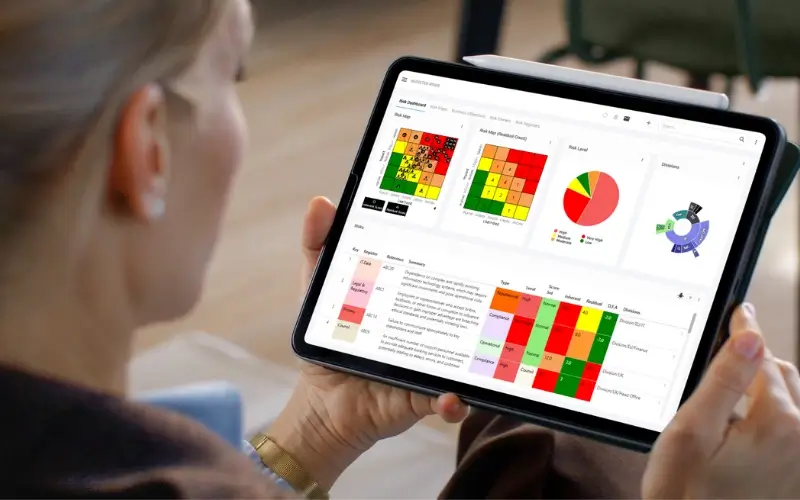
- Create dashboards and reports for management and boards
- Use AI assistance to analyse risks, controls, causes and consequences
- Adapt and expand the platform through modular functionality
Symbiant’s AI capabilities assist risk professionals without replacing human judgement. Customer information is not stored or used to train the AI model.
Build a more proactive risk management programme
Effective risk treatment is not about eliminating every uncertainty. It is about making deliberate, evidence-based decisions concerning which risks to mitigate, accept, transfer or avoid.
The difference between reactive and proactive risk management lies in how consistently those decisions are applied. Clear ownership, connected controls, proportionate actions, regular reviews and reliable audit trails help ensure that risks remain actively managed as circumstances change.
Symbiant brings these elements together in one configurable GRC platform, giving organisations the visibility and accountability needed to manage risk proactively and build lasting resilience.
Book a personalised demonstration to see how Symbiant can support your organisation’s risk management and treatment processes.