Independent Analyst Concerns Around ServiceNow for GRC
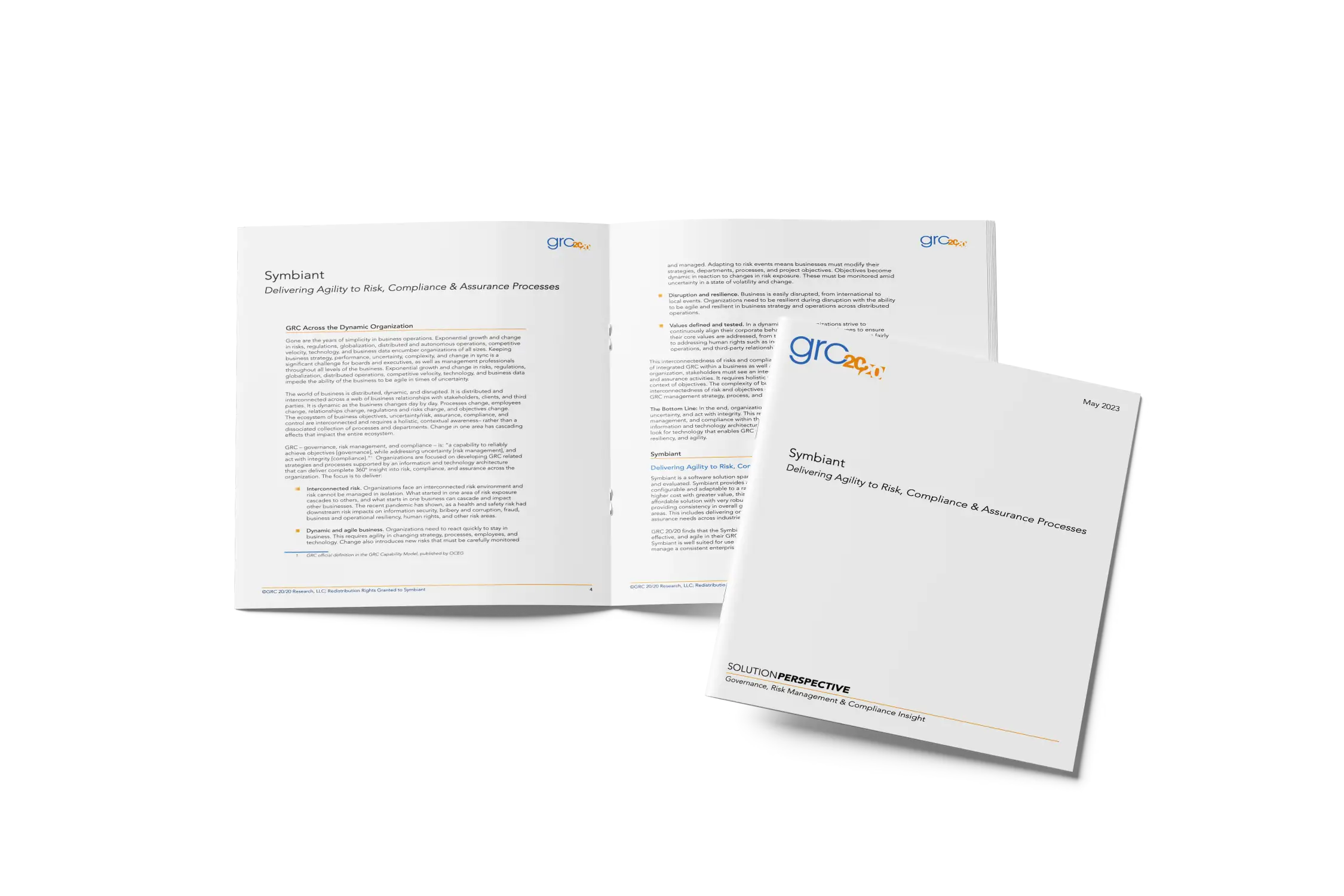
Independent GRC analyst Michael Rasmussen of GRC 20/20 Research has published extensive commentary on ServiceNow implementations used for GRC and Integrated Risk Management.
His observations draw on conversations with organisations evaluating, implementing and replacing GRC technology across different industries and countries.
Rasmussen does not argue that ServiceNow cannot support GRC. His position is explicitly one of caution: organisations should evaluate whether ServiceNow is the right fit for their GRC requirements, particularly outside IT, and consider the implementation expertise and resources required.
However, his published observations about ServiceNow for GRC are unusually direct.
“I get more complaints on ServiceNow than any other solution in the market. By a long shot.”
— Michael Rasmussen, GRC 20/20 Research
He has also stated:
“I have not met one GRC professional outside of IT who loves the product.”
— Michael Rasmussen, GRC 20/20 Research
These are Rasmussen’s independent observations based on his interactions with the GRC market, rather than claims made by Symbiant.
His recurring concerns include complexity and cost, business-user adoption, dependence on implementation expertise, IT-led purchasing decisions, and the resources required to maintain customised ServiceNow GRC environments.
Complexity and cost
Rasmussen reports organisations finding ServiceNow implementations more complex and expensive than expected, particularly where significant configuration, consulting and ongoing administration are required.
He has also raised concerns about licensing complexity and total cost of ownership.
User experience and adoption
One of Rasmussen’s most frequently repeated concerns relates to business-user adoption.
He describes organisations where risk and compliance teams have been reluctant to engage directly with the platform because they found the experience cumbersome. In some examples, he reports organisations returning parts of their risk processes to spreadsheets despite having ServiceNow in place.
Dependence on implementation expertise
Rasmussen emphasises that successful ServiceNow GRC implementations can depend heavily on the quality and experience of the implementation team.
He highlights the importance of bringing together GRC practitioners, enterprise architects, data architects and appropriate ServiceNow expertise.
For organisations with those resources, this may be manageable. Buyers seeking a more self-contained GRC implementation should therefore consider the additional architecture, consulting and administration requirements as part of procurement.
Business requirements versus IT requirements
Another concern raised in Rasmussen’s research is that GRC technology decisions can sometimes be driven by an organisation’s existing IT platform strategy rather than the requirements of its risk, compliance and audit teams.
An organisation already using ServiceNow extensively may naturally consider extending the platform into IRM. Rasmussen argues that risk, compliance and audit professionals should nevertheless participate directly in evaluating whether it meets their requirements.
Maintenance and ongoing configuration
Rasmussen has also reported concerns from organisations about maintaining customised ServiceNow GRC environments and managing change as implementations evolve.
These experiences are not presented as representative of every ServiceNow customer. They do, however, illustrate why buyers should assess not only implementation requirements but also the resources needed to operate, maintain and adapt the platform over its lifecycle.
What ServiceNow Says About Its GRC Platform
A balanced comparison should also consider ServiceNow’s own positioning.
ServiceNow describes Integrated Risk Management as providing a connected view of risk across the enterprise.
Its current platform includes capabilities covering:
- Enterprise Risk Management
- Policy and Compliance Management
- Audit Management
- Business Continuity Management
- Third-Party Risk Management
- Privacy Management
- Technology and Cyber Risk
- AI-supported risk and compliance workflows
- Automated control testing
- Risk assessments
- Real-time dashboards
- Continuous monitoring
ServiceNow also benefits from a large enterprise ecosystem of integrations, implementation partners, developers and consultants.
For organisations already using the ServiceNow platform extensively, connecting risk processes with existing technology, security and operational workflows can therefore be a significant advantage.
The question is not whether ServiceNow has GRC capability.
It clearly does.
The more useful question is how much of the wider ServiceNow ecosystem your organisation actually needs in order to manage GRC effectively.
Why Some Organisations Evaluate Alternatives to ServiceNow for GRC
The challenge with enterprise software is rarely whether something is technically possible.
It is whether the resulting system is proportionate to the problem being solved.
Organisations evaluating a ServiceNow GRC alternative may therefore be asking questions such as:
- Do we need the wider ServiceNow platform, or primarily GRC?
- How much configuration will be required?
- Will occasional business users actually engage with the system?
- How much specialist expertise will we need internally?
- Will we depend heavily on implementation partners?
- What will the platform cost to operate over several years?
- How easily can our risk and compliance teams change workflows themselves?
- Can we expand our GRC programme without creating another major implementation project?
These are exactly the areas buyers should investigate during a GRC procurement exercise.
Ease of Adoption
A GRC platform does not create value simply because risk professionals can use it.
Much of the information required by GRC teams originates elsewhere in the organisation.
Risk owners must update risks.
Control owners must provide evidence.
Employees must report incidents.
Managers must complete assessments.
Auditees must respond to findings.
Business teams must complete questionnaires and actions.
The effectiveness of the system therefore depends heavily on whether occasional users are willing and able to engage with it.
Symbiant GRC
Symbiant can provide users with interfaces containing only the information and activities relevant to their role.
An individual may only need to:
- update an action;
- review a control;
- provide audit evidence;
- report an incident;
- complete an assessment; or
- update a risk.
Granular permissions determine exactly what each person can see and do.
This allows organisations to distribute responsibility across the business without requiring every participant to understand the entire GRC platform.
ServiceNow
ServiceNow also provides role-based experiences and promotes engagement of the first line through its platform.
However, user adoption is one of the most persistent areas highlighted in Rasmussen’s commentary about real-world ServiceNow GRC deployments.
For buyers, this makes usability an important area to test directly.
Rather than relying solely on administrator demonstrations, organisations should consider allowing actual risk owners, control owners and occasional business users to participate in product evaluation.
Implementation and Configuration
Both platforms are configurable.
But configurability and implementation complexity are not the same thing.
Symbiant GRC
Symbiant begins with ready-made GRC modules that can then be configured around an organisation’s requirements.
Configuration can include:
- terminology;
- forms and fields;
- permissions;
- risk methodologies;
- workflows;
- approvals;
- notifications;
- scoring;
- dashboards;
- reports;
- questionnaires; and
- relationships between GRC records.
This provides flexibility while retaining an established GRC structure.
Support, training and standard configuration assistance are included.
ServiceNow
ServiceNow provides extensive platform-level configuration and development capabilities.
It also has a substantial implementation ecosystem and specifically directs customers towards ServiceNow experts and implementation partners for implementation and optimisation.
This can make ServiceNow particularly powerful where organisations have complex enterprise architecture requirements.
It can also mean that buyers should carefully understand the amount of architecture, implementation, partner support and ongoing administration required for their intended GRC use cases.
Rasmussen’s analysis repeatedly stresses the importance of selecting the right implementation expertise when deploying ServiceNow for GRC.
Risk, Controls and Connected Assurance
Both platforms aim to provide a connected view of risk.
Symbiant allows organisations to connect information including:
Objectives → Risks → Controls → Indicators → Incidents → Assurance → Actions
This means risk information does not need to exist as an isolated register.
For example:
A business objective can have associated risks.
Those risks can have controls.
Controls can have evidence and assurance.
Incidents can reveal weaknesses in controls.
Audits can generate findings.
Findings can create actions.
Actions can be tracked through to completion.
The result is a connected evidence chain that helps management understand not simply what risks have been recorded, but whether the organisation has evidence that those risks are being managed.
ServiceNow similarly promotes unified enterprise risk data and the connection of risk, compliance, technology and operational workflows.
Organisations should therefore evaluate both platforms against the specific relationships they need to model rather than comparing feature lists alone.
Reporting and Decision Support
A GRC system should ultimately help people make better decisions.
Symbiant includes standard reporting, configurable dashboards and a custom report builder.
Information can be reported across connected modules, allowing organisations to examine relationships such as:
- risks and controls;
- risks and incidents;
- controls and evidence;
- audits and findings;
- findings and actions;
- compliance obligations and monitoring;
- objectives and associated risks.
Standard reporting and custom report creation are included.
ServiceNow also offers dashboards, advanced reporting, analytics and real-time risk information across its platform.
Its wider technology ecosystem can be particularly valuable where organisations want to combine GRC information with extensive IT, security and operational data.
AI Capabilities
AI is increasingly becoming part of both platforms.
ServiceNow’s current Integrated Risk Management offering incorporates AI and AI agents across risk and compliance workflows.
ServiceNow describes AI capabilities including identifying risk patterns, surfacing emerging threats, classifying controls, generating remediation plans and routing work to appropriate teams.
Symbiant’s optional AI Assistant works with connected GRC information to support activities such as:
- generating risks;
- suggesting causes and consequences;
- identifying potential duplicate risks;
- analysing controls;
- suggesting mitigations;
- connecting incidents with relevant risks;
- supporting audit recommendations and actions.
When comparing AI capabilities, buyers should look beyond whether a platform simply offers AI.
Questions should include:
- What information can the AI access?
- How are permissions enforced?
- Which GRC processes does it understand?
- Can AI actions be reviewed?
- How is organisational data protected?
- How much additional configuration is required?
- What additional licensing costs apply?
Pricing and Total Cost of Ownership
The commercial models are substantially different.
Symbiant GRC
Symbiant publishes its standard starting pricing:
- £300/month for one module and 10 active-user seats
- £100/month for each additional module
- Unlimited registered users
- Support included
- Training included
- Standard configuration included
- Reporting included
- Flexible 30-day rolling contracts
- Optional AI Assistant available separately
This enables organisations to estimate costs before beginning a procurement process and expand their implementation gradually.
ServiceNow
ServiceNow does not publish a standard GRC/IRM price on its public product pages and directs prospective customers to request pricing.
The total cost will depend on the products, licensing, implementation, integrations, professional services and wider ServiceNow environment required.
Rasmussen has repeatedly identified cost and total cost of ownership as concerns reported to him by organisations operating ServiceNow for GRC.
This does not mean ServiceNow will be disproportionately expensive for every organisation.
For businesses already heavily invested in ServiceNow, extending an established platform may provide efficiencies that a standalone comparison would not capture.
Buyers should therefore compare total lifecycle cost, including:
- software licensing;
- implementation;
- configuration;
- integrations;
- consulting;
- internal administration;
- training;
- maintenance; and
- future changes.
When ServiceNow May Be the Better Fit
ServiceNow may be particularly suitable where an organisation:
- already uses ServiceNow extensively across the enterprise;
- wants GRC closely integrated with IT and security workflows;
- has complex multinational technology requirements;
- has strong ServiceNow expertise internally;
- has access to enterprise and data architecture resources;
- has an established ServiceNow implementation partner;
- requires broad enterprise workflow capabilities beyond GRC; or
- considers consolidation onto the wider ServiceNow platform strategically important.
ServiceNow’s size, ecosystem and breadth are genuine strengths for organisations that need them.
When Symbiant May Be the Better Fit
Symbiant may be particularly suitable where an organisation:
- primarily needs governance, risk, audit and compliance functionality;
- wants a purpose-built GRC environment;
- wants broad capability without deploying a wider enterprise technology platform;
- values straightforward adoption;
- wants occasional users to interact with simple role-relevant interfaces;
- needs extensive configuration without a large development project;
- wants transparent pricing;
- values support and training being included;
- wants flexible commercial terms;
- needs connected risk, controls, incidents, audit, compliance and actions;
- wants direct access to the team developing and supporting the platform.
This can be particularly attractive to organisations that need sophisticated GRC capabilities but do not want sophisticated GRC to mean unnecessarily complicated technology.
A Different Philosophy
ServiceNow and Symbiant ultimately represent two different approaches.
ServiceNow asks:
How can risk and compliance become part of a much broader enterprise technology and workflow ecosystem?
Symbiant asks:
How can governance, risk, compliance and assurance work together as simply and effectively as possible?
Neither question is inherently wrong.
For organisations with substantial ServiceNow investment, complex IT environments and the resources to support the platform, ServiceNow IRM can provide powerful enterprise integration.
For organisations whose priority is GRC itself, Symbiant offers an alternative: a dedicated platform combining connected GRC capabilities, extensive configurability, straightforward adoption and a substantially simpler commercial model.
The right choice depends on the organisation’s technology strategy, GRC requirements, resources and appetite for implementation complexity.
Independent Research Worth Reading
Organisations considering ServiceNow for GRC should conduct their own due diligence.
One useful independent perspective is Michael Rasmussen’s April 2025 GRC 20/20 Research analysis:
“The ServiceNow Emperor Has No GRC Clothes (Or Needs a Better Tailor)”
Rasmussen describes the article not as a recommendation against purchasing ServiceNow, but as a caution encouraging organisations to evaluate fit, implementation resources and business requirements carefully.
He has subsequently published further observations from organisations in Europe, financial services and other sectors describing similar issues around usability, adoption, implementation demands and cost.
These represent Rasmussen’s independent analyst observations and reported customer experiences. They should not be interpreted as the experience of every ServiceNow customer.
Final Thoughts
ServiceNow is one of the world’s largest enterprise technology platforms and provides extensive risk, compliance, audit, resilience and third-party risk capabilities.
Its greatest strength may also be the most important question for prospective GRC buyers: do you need the wider platform?
For organisations already committed to ServiceNow and able to support a substantial enterprise implementation, the answer may well be yes.
For organisations primarily trying to improve risk, audit, compliance and assurance, a purpose-built GRC platform may provide a more proportionate route.
Symbiant provides connected and highly configurable GRC functionality without requiring organisations to adopt a wider enterprise workflow ecosystem.
That difference, not simply the number of features, is what buyers should evaluate.